Physical Address
304 North Cardinal St.
Dorchester Center, MA 02124

Physical Address
304 North Cardinal St.
Dorchester Center, MA 02124
Written By:
Stress is something we all experience—but not in the same way. Everyone experiences stress differently, shaped by personality, nervous system responses, and past experiences [1]Translational models of stress and resilience: An applied neuroscience methodology review..
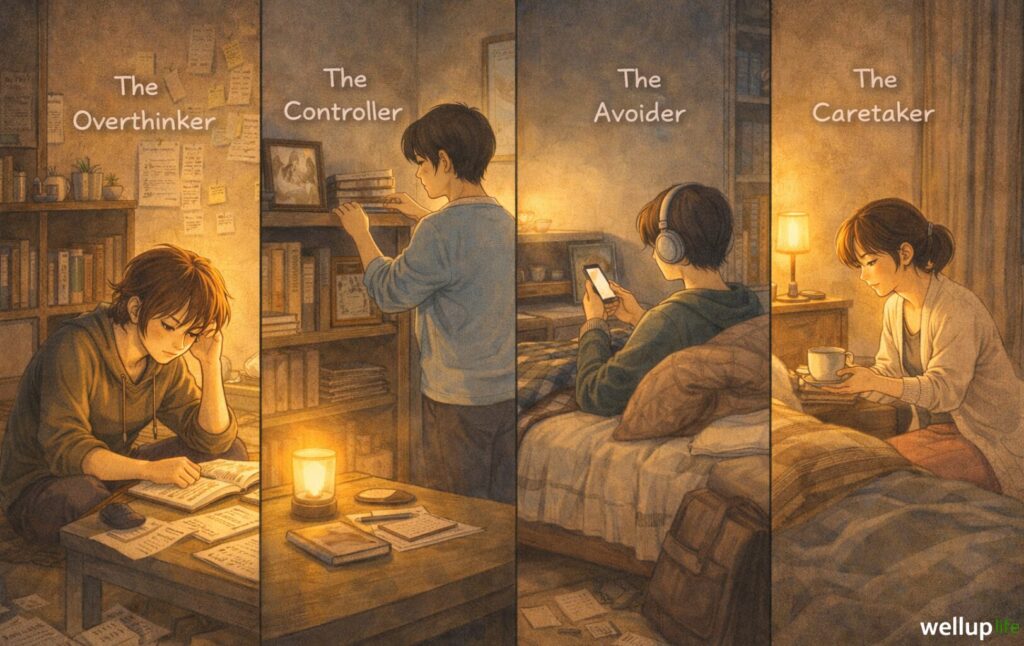
While one person may overthink every detail, another springs into action, shuts down, or focuses entirely on supporting others. These differences aren’t random. They reflect your stress personality—the patterns that shape how you respond to pressure, uncertainty, and emotional overload.
Understanding your stress personality type can help you make sense of your reactions instead of judging them. It explains why certain coping strategies work for you while others don’t, and why stress affects your mind, body, or relationships in specific ways. Most importantly, it shows you how to work with your natural tendencies rather than against them.
This quiz is designed to help you identify your stress coping style—whether you tend to overthink, take control, avoid conflict, or care for others first. There are no right or wrong answers, and no type is better than another. Each one comes with its own strengths, challenges, and opportunities for healthier stress management.
Answer the questions honestly, go with your first instinct, and see what your stress personality reveals about how you handle pressure—and how you can support yourself better when life feels overwhelming.
Find out how you usually handle stress and get tips to make it easier to cope. Just answer honestly and see which stress style fits you best.
This quiz is for anyone who feels stressed and wants to understand why they react the way they do. If you’ve ever wondered why pressure makes you overthink, take control, shut down, or put everyone else first, this quiz will help you identify your natural stress response pattern.
It’s especially helpful if you:
You don’t need to be at a breaking point to take this quiz. It’s designed for everyday stress—work pressure, relationship tension, decision fatigue, and emotional overload. Whether stress shows up loudly or quietly in your life, understanding your stress personality can help you respond with more clarity, compassion, and balance.
Everyone experiences stress, but the way you respond to it follows recognizable patterns. These stress personality profiles reflect your most common stress responses—how your mind, body, and emotions react when you feel pressured, overwhelmed, or uncertain.
Stress isn’t just a mental experience; it also affects your body by activating your nervous system, hormones, and physical responses under pressure. Research shows that stress triggers both physical and mental responses, involving the brain, nervous system, and hormones such as cortisol [2]Physiology, Stress Reaction.
Your result is based on the answers you chose most often. While you may see parts of yourself in more than one profile, your primary result highlights the stress coping style you rely on the most. This isn’t a fixed label or a diagnosis. Instead, it’s a tool for self-awareness and healthier stress management.
Below are the four main stress personality types you may receive:
Each profile includes:
As you read your result, notice what resonates. The goal isn’t to change who you are—it’s to understand your stress patterns so you can respond with more intention, balance, and self-compassion.
Your stress personality result highlights the patterns you rely on most when life feels demanding. It shows how you typically think, feel, and act under pressure—not because something is wrong with you, but because your nervous system has learned what feels safest and most effective over time.
Each stress personality type comes with both strengths and challenges. For example, what helps you cope in the short term—overthinking, taking control, avoiding conflict, or caring for others—can also become a source of stress if it’s the only strategy you use. Understanding this balance is the first step toward healthier stress management.
You may also notice that parts of more than one result feel familiar. That’s normal. Stress responses aren’t rigid categories, and they can shift depending on your environment, relationships, or current life stage. Your result simply points to your dominant stress coping style right now.
Use your result as a guide, not a label. Let it help you:
The more you understand how stress shows up for you, the easier it becomes to work with your natural tendencies—and to create space for calmer, more balanced responses when challenges arise.
Stress affects everyone differently, and each personality type has unique ways to manage it effectively. Here are 5 daily stress relief habits tailored to each stress personality that you can implement right away:
These habits are simple, but consistent practice can help you respond to stress with awareness, balance, and resilience—without forcing you to completely change your personality.
Understanding your stress personality is the first step toward responding to pressure with awareness, balance, and self-compassion. Whether you’re an Overthinker, Controller, Avoider, or Caretaker, your natural coping style comes with unique strengths—and challenges. By recognizing these patterns, you can choose strategies that work with you rather than against you, reduce overwhelm, and build resilience over time.
Incorporating small daily habits—like mindfulness, structured breaks, or boundary-setting—can make a significant difference in how you handle stress. Remember, this quiz is a tool for self-awareness, not a diagnosis.
Stress is a normal part of life, but when it becomes persistent or overwhelming—affecting your health, relationships, or daily functioning—it’s important to seek guidance from a qualified medical or mental health professional.
Ongoing stress can disrupt sleep, emotional well-being, and overall health, which is why professional support can make a meaningful difference. Research shows that long-term stress is associated with sleep problems, anxiety, burnout, and increased risk of physical health issues [3]Chronic Stress Can Hurt Your Overall Health.. Getting help early can provide the right support and tools to manage stress safely and effectively.
Take what resonates from your stress personality result, experiment with the practical tips and daily habits, and give yourself permission to respond to stress with kindness and intention.
Read Next: What’s Your Emotional Strength Type? (Take the Quiz)