Physical Address
304 North Cardinal St.
Dorchester Center, MA 02124

Physical Address
304 North Cardinal St.
Dorchester Center, MA 02124
Written By:
Medically Reviewed By:
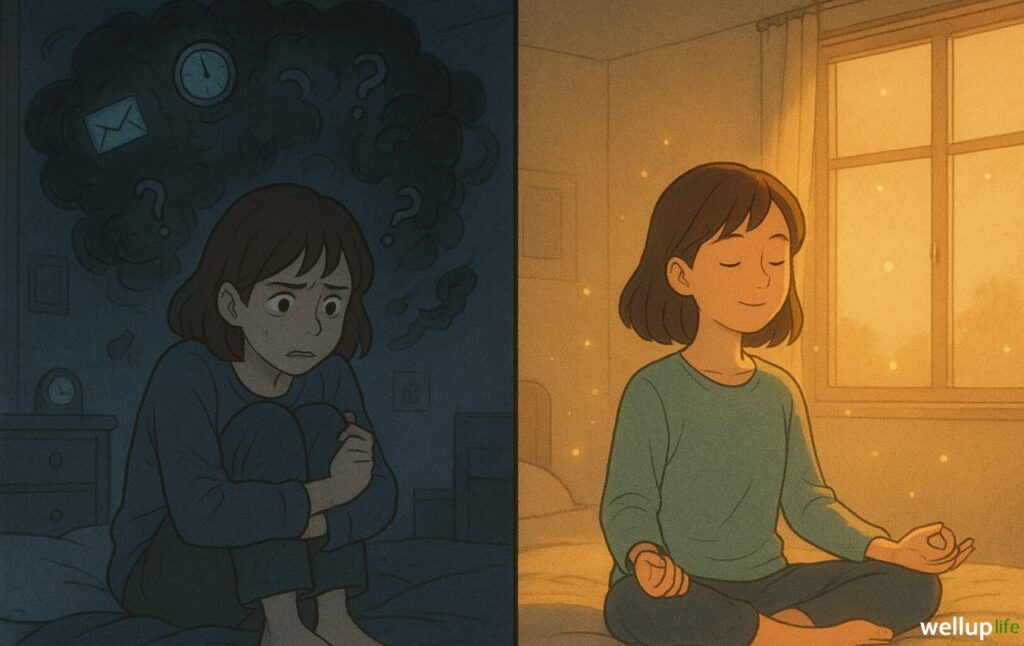
Anxiety can feel like your mind is running on overdrive — replaying worries, overthinking the future, or feeling restless even when nothing is “wrong.” It’s a common experience, especially in today’s fast-paced world. But here’s the truth: you don’t need hours of meditation or a retreat in the mountains to find calm. Mindfulness exercises, even short ones, can help you reconnect with the present moment and ease anxious thoughts.
Mindfulness is simply the practice of noticing what’s happening right now — your breath, sensations, or surroundings — without judgment. When you bring your awareness to the present, your mind has less room to spiral into “what-ifs.” Studies have shown that regular mindfulness practice can significantly reduce anxiety and stress levels, improving both emotional balance and overall well-being.
[1]Mindfulness meditation has been shown to reduce anxiety and promote emotional regulation in numerous clinical trials.
In this guide, we’ll explore 7 mindfulness exercises for anxiety that really work — simple techniques you can start practicing today, even if you’ve never meditated before. Each one is backed by research, easy to follow, and designed to bring you back to a calmer, more grounded version of yourself.
Anxiety often begins when the mind drifts into the past or rushes ahead into the future — replaying what went wrong or imagining what could go wrong next. Mindfulness helps interrupt that loop. By focusing on the present moment, it gently guides the mind away from worry and back to what’s actually happening now.
Mindfulness means paying full attention to your thoughts, emotions, and sensations without trying to change or judge them. It’s not about “emptying your mind” or forcing yourself to relax. Instead, it’s about becoming aware — noticing when your thoughts wander and calmly bringing your focus back. Over time, this awareness builds emotional resilience and helps you respond more calmly to life’s challenges.
When we practice mindfulness, we train the brain to pause before reacting. This small pause creates space between you and your thoughts — space to observe them rather than be swept away by them.
Research shows that mindfulness meditation can reduce activity in the amygdala, the brain region responsible for the “fight or flight” response, while strengthening connections in areas that regulate emotion and attention.
[2]Neuroscientific studies suggest that mindfulness reduces amygdala activity and increases connectivity in brain regions that support emotional regulation.
In simpler terms, mindfulness helps calm the body’s stress response. Breathing slows down, heart rate steadies, and the mind learns to stay grounded instead of spiraling into anxious thoughts.
Dozens of studies have found that mindfulness-based practices — from short breathing exercises to full meditation programs — significantly reduce symptoms of anxiety and stress.[3]A meta-analysis published in JAMA Internal Medicine found mindfulness meditation programs to be effective in reducing anxiety, depression, and pain.
In one study conducted among healthcare professionals in India, participants who practiced guided mindfulness sessions for just a few weeks reported measurable decreases in anxiety, depression, and stress levels.[4]An Indian randomized controlled trial found online mindfulness interventions effective in reducing anxiety, depression, and stress among healthcare providers.
These findings make one thing clear: mindfulness doesn’t just “feel good” — it works. By training your awareness, you’re reshaping how your brain responds to stress.
Mindfulness isn’t something abstract or mystical — it’s a skill that grows with simple, consistent practice. You don’t need a meditation cushion, incense, or a silent retreat to start. The following mindfulness exercises are practical, science-backed techniques you can use anywhere — at home, at work, or even in the middle of a stressful moment.
Let’s explore seven mindfulness exercises for anxiety that truly make a difference.
When anxiety hits, our breathing often becomes shallow and fast — signaling the body to stay on high alert. Mindful breathing is one of the simplest and most powerful ways to calm that response. It brings your attention back to the present moment while activating the body’s natural relaxation system.
How to Practice:
As you breathe, notice the air moving in and out — its temperature, sound, and the gentle movement of your body. Each exhale signals safety to your nervous system, helping your mind relax and your heartbeat slow down.
Why It Works:
Deep, diaphragmatic breathing activates the parasympathetic nervous system, often called the “rest and digest” mode, which counteracts the stress-driven fight or flight response.
[5]Slow, deep breathing activates the parasympathetic nervous system and helps reduce symptoms of anxiety and stress.
Even just five minutes of mindful breathing can noticeably reduce anxiety, enhance focus, and bring a sense of grounded calm. The best part? You can do it anywhere — in bed, at your desk, or while waiting in a long line.
Anxiety often builds up in the body long before we notice it in the mind — tight shoulders, clenched jaw, or a constant feeling of restlessness. The Body Scan Meditation helps you reconnect with your physical sensations, release hidden tension, and bring awareness back into the present moment.
It’s one of the most effective mindfulness exercises for anxiety because it teaches you to notice and relax your body step by step, rather than trying to “think” your way out of stress.
How to Practice:
Why It Works:
The Body Scan Meditation helps break the cycle of anxiety by reconnecting mind and body. It cultivates awareness of physical sensations that often go unnoticed during stressful times. This awareness can reduce muscle tension and interrupt anxious thinking patterns.
Research has shown that body scan practices, even short daily sessions, can lower physiological signs of stress and improve emotional regulation.
[6]Clinical trials indicate that body scan meditation significantly reduces anxiety, stress, and improves sleep quality.
Many people find it especially helpful before sleep, as it calms both the body and mind. Over time, you’ll begin to notice tension earlier and release it before it turns into deeper anxiety.
When anxiety strikes suddenly — racing heart, tight chest, spiraling thoughts — your mind is often stuck in a storm of what-ifs rather than the present moment. The 5-4-3-2-1 Grounding Technique is a quick, science-backed mindfulness exercise that helps pull you out of your thoughts and anchor you firmly in the “now.”
It’s one of the best mindfulness techniques for anxiety relief because it uses your senses — what you can see, touch, hear, smell, and taste — to bring your focus back to reality.
How to Practice:
When you start feeling anxious or overwhelmed, pause and slowly go through these steps:
As you move through your senses, breathe slowly and remind yourself: I am safe. I am here, in this moment.
Why It Works:
This grounding technique works because it reorients your brain from internal panic to external awareness. By naming sensory experiences, you activate different regions of the brain involved in perception and attention, shifting focus away from anxious thoughts.
Research supports sensory grounding as an effective coping tool for acute stress and panic.[7]Grounding techniques that engage the senses can reduce physiological arousal and interrupt panic responses in individuals with anxiety.
It’s fast, discreet, and can be done anywhere — during a stressful meeting, while commuting, or even lying awake at night. With practice, this method becomes a mental “reset button” you can press anytime anxiety starts to rise.
Mindfulness doesn’t always have to happen sitting still with closed eyes. Mindful walking turns a simple, everyday activity into a moving meditation that helps ease anxiety, clear the mind, and reconnect you with the world around you.
When you walk mindfully, you focus on each step, your breathing, and your surroundings — noticing how your body feels in motion. It’s one of the most accessible mindfulness exercises for anxiety because it blends awareness with gentle physical activity, naturally lowering stress hormones.
How to Practice:
You can also practice mindful walking during short breaks at work or between tasks. Even a five-minute mindful walk can help reset your mood and focus.
Why It Works:
Walking mindfully grounds you in the body and helps release physical restlessness — a common symptom of anxiety. It engages the senses, balances the nervous system, and promotes a calm, alert state of mind.
Studies suggest that mindful walking can significantly reduce anxiety and improve overall emotional well-being by synchronizing physical rhythm with mental focus [8]Mindful walking interventions have been shown to reduce anxiety and depressive symptoms while enhancing overall well-being..
Over time, you may notice that even routine walks — from your room to the kitchen, or from the bus stop to home — become small moments of calm awareness.
Anxiety often feeds on self-criticism, fear, and the pressure to “be enough.” Loving-Kindness Meditation (Metta) helps soften that inner tension by cultivating compassion — first toward yourself, and then toward others. It’s a powerful mindfulness practice that replaces anxious self-talk with warmth and acceptance.
Instead of trying to get rid of negative emotions, Metta teaches you to meet them with kindness. Over time, it helps rewire how you relate to yourself and the world, reducing emotional reactivity and building inner peace.
How to Practice:
You don’t have to feel loving right away. Simply practicing these words with intention starts to open the heart and quiet the mind.
Why It Works:
Loving-Kindness Meditation helps break patterns of anxiety linked to fear and self-judgment. By focusing on compassion, your brain releases positive emotions that counterbalance the stress response.
Research has shown that Metta meditation increases positive affect, reduces symptoms of anxiety and depression, and improves emotional resilience [9]Studies have demonstrated that loving-kindness meditation reduces anxiety and increases positive emotions by enhancing self-compassion and empathy..
When practiced regularly, even for a few minutes, it can transform how you speak to yourself during anxious moments — turning inner criticism into calm reassurance.
When anxiety takes over, the mind often feels cluttered — full of racing thoughts, worries, and endless “what if” scenarios. Mindful journaling helps bring clarity to that chaos. It’s not about writing perfectly or analyzing every thought — it’s about observing what’s happening inside you with honesty and compassion.
This practice turns journaling into a mindfulness exercise by combining awareness with expression. Instead of letting anxious thoughts swirl endlessly, you put them on paper — where they lose their power over you.
How to Practice:
You can also end your journaling session by noting three small things you’re grateful for — this gently shifts attention from anxiety to appreciation.
Why It Works:
Mindful journaling helps you step back from your thoughts instead of getting lost in them. It builds the skill of thought observation — recognizing that you are not your thoughts; you’re simply the one witnessing them.
Psychological studies have found that expressive writing and mindfulness-based journaling can reduce anxiety, improve emotional regulation, and lower rumination [10]Mindful expressive writing has been shown to reduce anxiety symptoms and improve emotional processing by increasing self-awareness..
Over time, journaling becomes a safe space — a mirror for your inner world where you can understand your triggers, track your progress, and learn to meet yourself with gentleness instead of judgment.
In moments of anxiety, the mind can feel scattered — jumping from one thought to another without pause. Mindful Sensory Observation, sometimes called Object Focus Meditation, helps quiet that mental noise by anchoring your attention to a single point of focus.
This practice is beautifully simple: you pick one object — a candle flame, a leaf, a cup of tea — and observe it with full awareness. By doing so, you train your mind to stay still, focused, and present, even when anxious thoughts try to pull you away.
How to Practice:
Why It Works:
This simple act of focused observation strengthens your attentional control — the ability to notice when your mind drifts and gently bring it back. That same skill helps you stay centered during moments of anxiety.
Neuroscientific research supports that single-object mindfulness practices enhance concentration, reduce emotional reactivity, and calm physiological stress responses [11]Focused attention meditation, such as object observation, improves attentional control and reduces stress-related brain activity..
Practicing mindful observation a few minutes a day can make everyday moments — sipping tea, watching clouds, or lighting a candle — opportunities for peace and stillness. Over time, it rewires your relationship with attention itself, helping you find calm wherever you are.
Like any meaningful habit, mindfulness becomes truly effective when practiced regularly. You don’t need long sessions or perfect conditions — even 5 to 10 minutes of daily mindfulness practice can gradually rewire your brain to handle stress more calmly.
Building a mindfulness routine is less about adding something new to your day and more about bringing awareness to what you already do — breathing, walking, eating, or simply pausing between tasks.
Begin with short sessions — maybe two or three minutes of mindful breathing in the morning or a quick body scan before bed. Consistency matters more than duration. When you practice daily, mindfulness shifts from being an “activity” to becoming a natural part of your mindset.
Try linking it with existing habits (a method known as habit stacking). For example:
These small anchors make it easier to sustain the practice without feeling pressured.
Having a small, calm spot — a corner with a candle, a mat, or even just a chair — can cue your brain that it’s “mindfulness time.” Keep it simple; the goal isn’t perfection, but presence.
If you prefer guided support, mindfulness apps or calming playlists can help you stay focused, especially in the beginning.
You don’t have to sit in silence to be mindful. Try weaving mindfulness into ordinary moments:
When mindfulness becomes part of your day-to-day activities, you naturally reduce stress and prevent anxiety from building up unnoticed.
Some days you’ll feel peaceful; other days, restless — and that’s okay. The goal isn’t to be calm all the time, but to notice whatever you feel without judgment.
You can jot down brief reflections in a journal:
Tracking progress builds motivation and reminds you that small steps lead to real change.
As mindfulness becomes a daily habit, you’ll likely notice subtle shifts — fewer racing thoughts, quicker recovery from stress, and more moments of stillness in your day. Over time, this steady awareness becomes a mental anchor, keeping you grounded even during anxious situations.
Research shows that consistent mindfulness practice, even as little as 10 minutes a day, can significantly reduce anxiety symptoms and improve emotional balance [12]Regular mindfulness practice, even short daily sessions, has been linked to lower anxiety and improved psychological well-being..
Mindfulness sounds simple — just “be present.” But when you actually sit down to practice, you quickly realize the mind has other plans. It drifts, judges, plans, and resists. That’s completely normal.
Building awareness takes patience and gentle persistence. Here are some practical tips and common pitfalls to help you stay on track as you cultivate mindfulness for anxiety relief.
A common misconception is that mindfulness will immediately make you feel relaxed. In reality, the goal isn’t to suppress anxiety but to observe it with curiosity and compassion.
At first, you might even feel more aware of your worries — and that’s part of the healing process. Over time, mindfulness changes how you relate to anxious thoughts, not necessarily how quickly they disappear.
Your mind will wander — a lot. That doesn’t mean you’re “bad” at mindfulness. Each time you notice distraction and gently return to the present, you’re strengthening your mental muscles.
Think of it as reps for your attention — every return builds awareness and emotional resilience.
Mindfulness isn’t about rigid focus or controlling your thoughts. If you find yourself straining to “stay mindful,” ease up. Take a breath, soften your gaze, and allow awareness to flow naturally.
True mindfulness feels light, not forced.
Skipping a few days can easily turn into weeks. Instead of aiming for perfection, commit to small, doable sessions. Even one minute of mindful breathing before bed keeps the practice alive.
You can also use reminders — a phone chime, sticky notes, or pairing mindfulness with routines (like morning tea) — to help the habit stick.
Sometimes, people unintentionally use mindfulness to avoid emotions — trying to feel calm instead of facing what’s really happening inside. Mindfulness should invite awareness, not escape.
If anxiety feels overwhelming, it’s perfectly okay to take breaks or seek support from a therapist. Mindfulness complements therapy beautifully but isn’t a replacement for professional help when needed [13]Mindfulness-based therapy has been shown to effectively complement clinical treatments for anxiety disorders, improving emotional regulation and stress tolerance..
You might not notice dramatic results at first, but small shifts — like fewer spiraling thoughts or feeling calmer in tense moments — are real signs of progress.
Remember: mindfulness isn’t a quick fix; it’s a lifelong skill. The more you practice, the more natural it becomes to respond rather than react to anxiety.
Mindfulness helps reduce anxiety by teaching you to stay focused on the present moment rather than getting lost in worries about the future or past. It activates the body’s relaxation response and lowers the stress hormone cortisol, leading to a calmer, more balanced state of mind.
Even 5 to 10 minutes of daily mindfulness practice can make a noticeable difference in reducing stress and anxiety. What matters most is consistency. Over time, regular practice strengthens your ability to respond calmly to anxious thoughts instead of reacting automatically.
Sometimes, yes — especially when you first start noticing your thoughts and emotions more clearly. This awareness can feel uncomfortable initially, but it’s a normal part of the process. The key is to observe without judgment and return to gentle breathing. If anxiety becomes overwhelming, it’s okay to pause or seek guidance from a therapist.
There’s no single “best” time — it depends on your lifestyle. Many people find early mornings or evenings helpful since the mind is quieter. You can also practice short mindfulness moments throughout the day — during a walk, while eating, or even during work breaks.
Not at all. While mindfulness apps and guided meditations can be helpful, you only need your breath and awareness. You can start anytime — right where you are — by simply noticing your breathing or tuning into your senses.
Mindfulness can be a powerful complement to therapy or medication, but it should not replace professional treatment for severe anxiety disorders. Combining mindfulness with counseling or cognitive behavioral therapy (CBT) often enhances long-term results.
Mindful breathing or the 5-4-3-2-1 grounding technique are two of the quickest and most effective ways to calm anxiety. They work by redirecting your focus from anxious thoughts to the present moment, slowing your heart rate, and relaxing your nervous system.
Anxiety doesn’t disappear overnight, but mindfulness gives you the tools to face it with clarity and compassion. Through mindful breathing, grounding, and sensory awareness, you train your mind to pause — to notice thoughts without letting them take control.
The real power of mindfulness lies in consistency. It’s not about doing it perfectly, but showing up — every day, even for a few minutes. Over time, these small mindful pauses add up, helping you feel calmer, more centered, and more in tune with the present moment.
Remember: mindfulness isn’t about escaping your emotions — it’s about befriending them. When you approach anxiety with curiosity rather than fear, you start transforming how you experience life itself.
Mindfulness isn’t a destination — it’s a lifelong journey of awareness, patience, and self-kindness.
Start where you are, take one mindful breath, and let that be enough for today.
Read Next: 7 Mindfulness Exercises for Students to Improve Focus & Learning







Medically Reviewed By: