Physical Address
304 North Cardinal St.
Dorchester Center, MA 02124

Physical Address
304 North Cardinal St.
Dorchester Center, MA 02124
Written By:
Reviewed By:

Think about the last time you tried to control something that was never really in your hands—a job interview result, a partner’s feelings, or the sudden twists of fate. We replay conversations, obsess over outcomes, and tighten our grip, hoping that effort alone can bend the world to our will. Yet, like sand slipping through our fingers, the harder we hold on, the faster life reminds us how little we truly control.
Psychologists call this the “illusion of control”—the tendency to overestimate how much power we have over uncontrollable events [1]Psychology Today: Illusion of Control. It explains why gamblers believe they can influence dice rolls or why we feel anxious when things don’t go exactly as planned. The illusion comforts us, but it also traps us in stress, disappointment, and endless worry.
Centuries ago, the Stoics faced the same struggle. Epictetus, a former slave turned philosopher, offered a simple but life-changing truth: some things are up to us, and some are not. This principle—often called the Dichotomy of Control—remains one of the most practical tools for inner peace [2]The Stoic Dichotomy of Control in Practice.
In this article, we’ll explore why control is largely an illusion, what Stoic wisdom teaches us about letting go, and how practical exercises like negative visualization and amor fati can help us live with greater freedom and calm. Let’s walk through this timeless lesson together—one that has the power to transform how we face uncertainty, loss, and life itself.
At its core, the illusion of control is a mental trap where we believe we have more influence over events than we actually do. The concept was first introduced by psychologist Ellen Langer in the 1970s, who showed that people often act as if chance outcomes—like rolling dice or picking lottery tickets—are somehow under their control [3]Langer, E.J. (1975). The Illusion of Control.
Think about it:
These small examples highlight a deeper truth: as humans, we crave certainty. Believing we’re in control gives us comfort, even if it’s an illusion. Psychologists explain that this bias helps us feel safer in an unpredictable world.
But while the illusion might soothe us in the short term, it often backfires. When outcomes don’t align with our expectations, we feel anxious, frustrated, or even guilty—thinking we should have done more, when in reality, it was never in our hands.
At first glance, believing you can control everything feels empowering—it gives you a sense of agency and purpose. But this mindset carries a heavy price. The more we cling to control, the more life feels like a constant battle against reality.
Psychologists note that when people overestimate their control, they are more vulnerable to stress, anxiety, and frustration [4]APA: Illusion of Control. Imagine preparing perfectly for a job interview, yet not getting the role. If you believe everything is under your control, you might spiral into self-blame: “I must have failed completely.” In truth, factors like company culture, budget cuts, or the interviewer’s mood were never in your hands.
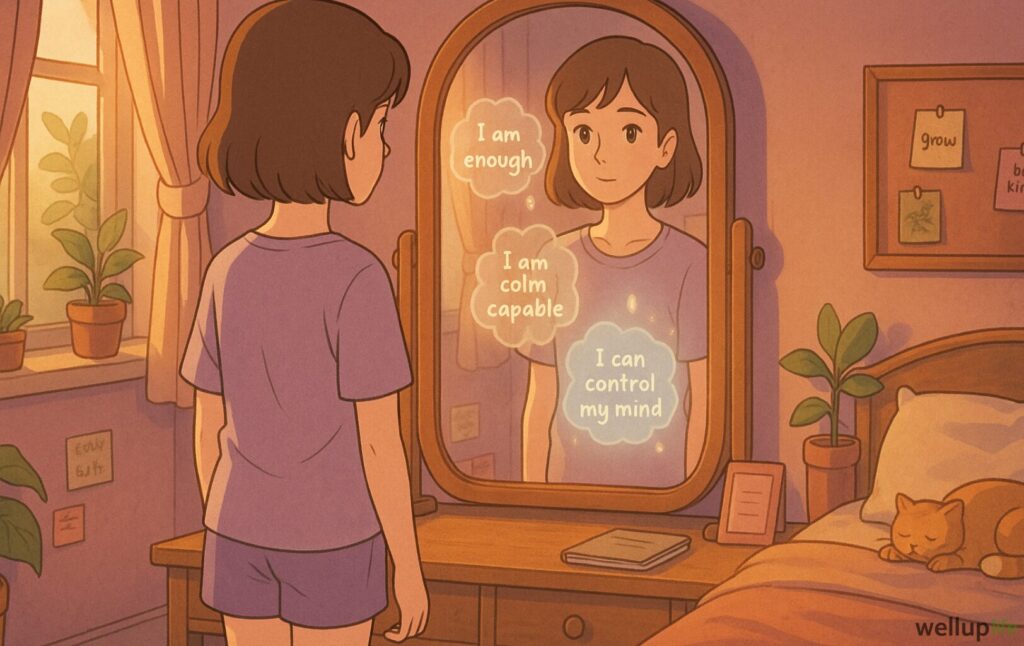
This illusion can also damage our relationships. When we try to control how others think, feel, or act, disappointment becomes inevitable. We can influence someone’s perception, but we can’t dictate it. As Marcus Aurelius wisely reminded himself, “You have power over your mind—not outside events.” [5]Meditations, Marcus Aurelius.
Even health and habits are subject to this paradox. You might eat clean, exercise daily, and still fall ill due to genetics or unforeseen circumstances. The illusion of full control tricks us into thinking we failed, when in fact, we simply faced the randomness of life.
Ultimately, the hidden cost of clinging to control is constant tension with reality. Instead of flowing with life, we fight it. And the harder we fight, the heavier the suffering becomes.
While modern psychology describes the illusion of control as a cognitive bias, the Stoics framed it centuries earlier in a practical way: divide life into two categories—what depends on us and what does not.
This principle comes from Epictetus, a Stoic philosopher who knew struggle firsthand. Born a slave, he discovered a kind of inner freedom that no external force could take away. In his Enchiridion, he wrote:
“Some things are up to us, and some are not.” [6]Epictetus, Enchiridion
According to Stoicism:
The beauty of this teaching lies in its clarity. You might not control whether people praise or criticize you, but you do control how you respond. You can’t control whether your investments succeed, but you can control your discipline, patience, and financial decisions.
Modern scholars often refer to this as the dichotomy of control, though some suggest it’s better understood as “what depends on us” rather than absolute “control” [7]What Many People Misunderstand About the Stoic Dichotomy of Control. This distinction matters, because Stoicism doesn’t promise total mastery over life—it teaches us to focus our energy where it actually makes a difference.
By realigning attention to what depends on us, the Stoics discovered a form of inner stability. When storms raged outside, they still had command over their minds, values, and choices. That, they believed, is the essence of true freedom.
The Stoics were clear: most of our suffering comes from chasing after things we cannot truly command. They observed that external outcomes are never fully in our hands—they depend on countless factors outside our influence, from other people’s choices to the randomness of fate.
Marcus Aurelius, the Roman emperor and philosopher, reminded himself daily:
“You have power over your mind—not outside events. Realize this, and you will find strength.” [8]Marcus Aurelius, Meditations
Why is control over external outcomes futile?
The Stoics believed that clinging to these externals was like anchoring your happiness to a stormy sea—you’re bound to be tossed around. By contrast, focusing on your own judgments, discipline, and character roots you in solid ground.
Epictetus put it bluntly: if you try to control what isn’t yours, you will end up “disturbed, hindered, and unhappy”.
This doesn’t mean we stop caring about results. Instead, Stoicism invites us to shift the measure of success: judge yourself not by outcomes, but by the effort and integrity you bring to the process. You prepare, you act with virtue, and then you let life take its course.
When people hear “let go,” they often imagine surrendering in defeat—doing nothing, caring less, or giving up entirely. But in Stoic philosophy, letting go is not the same as passivity. It’s not about withdrawing from life; it’s about engaging with life in a wiser way.
The Stoics believed that letting go means focusing your energy only on what depends on you, and releasing your attachment to what doesn’t. In other words, you still act, but you stop demanding that the world must obey your efforts.
Take an example:
As modern Stoic writers remind us, the goal is selective effort, not passivity [9]Modern Stoicism: Dichotomy of Control Misunderstood. By choosing where to place your attention and energy, you conserve strength and reduce frustration.
Letting go, then, becomes a form of empowerment. It frees you from the exhausting burden of controlling the uncontrollable, while sharpening your focus on the actions that truly matter.
When you stop fighting the uncontrollable and embrace the Stoic mindset, the rewards are both profound and practical. Letting go of the illusion of control doesn’t mean resignation—it means liberation.
Here’s what you gain:
Marcus Aurelius captures it succinctly:
“If you are distressed by anything external, the pain is not due to the thing itself, but to your estimate of it; and this you have the power to revoke at any moment.”
By surrendering the illusion of control, you are not giving up—you are choosing freedom. You are reclaiming your attention, your energy, and your peace of mind.
One of the most powerful tools the Stoics used to release attachment to outcomes is negative visualization, or premeditatio malorum—literally, “the premeditation of evils.”
The idea is simple: imagine the worst-case scenarios before they happen. By mentally rehearsing setbacks, loss, or failure, you reduce fear and anxiety when life inevitably throws challenges your way. This practice doesn’t make you pessimistic—it makes you resilient and grounded.
For example:
Epictetus emphasized this as a way to train the mind:
“He is a wise man who does not grieve for things he lacks, but rejoices for things he has.”
How to practice it:
By regularly practicing negative visualization, you train your mind to let go of what you can’t control while sharpening your focus on meaningful actions. Over time, this exercise transforms anxiety into preparedness and fear into calm confidence.
Another cornerstone of Stoic practice is learning to separate our judgments from reality. The Stoics recognized that life events themselves are neutral—what matters is how we interpret them. By shifting our perspective, we can reduce suffering and respond with clarity.
Epictetus famously said:
“Men are disturbed not by things, but by the views which they take of them.”
In modern terms, this is called cognitive reframing—changing how you perceive events to reduce emotional distress.
Examples of reframing:
Practical exercise:
By consistently practicing reframing, you reclaim control over your mind—your inner fortress—without wasting energy trying to control the uncontrollable outside.
If negative visualization teaches us to anticipate life’s challenges, amor fati takes it a step further—it teaches us to embrace whatever life brings, not just endure it. The term literally means “love of fate.”
The Stoics believed that true freedom comes when we stop resisting reality and instead accept it fully, even when it’s difficult. As Marcus Aurelius wrote:
“Love the hand that fate deals you and play it as your own.”
How it differs from resignation:
Practical ways to practice amor fati:
By adopting amor fati, you transform life’s obstacles into opportunities for growth. Letting go of the illusion of control becomes not just a release, but a joyful acceptance—a recognition that everything that happens is part of your path, and that path is yours to navigate with integrity and purpose.
Stoicism isn’t just philosophy—it’s a way of life, and like any skill, it grows stronger with daily practice. Small, consistent rituals and reflective journaling can help you internalize the lessons of letting go and focusing on what truly depends on you.
Daily Rituals to Practice Letting Go:
Journaling Prompts to Strengthen Your Mind:
By incorporating these simple rituals, you train your mind to distinguish effort from outcome, control from influence. Over time, this practice builds resilience, clarity, and inner peace.
As Seneca wisely said:
“We are always complaining that our days are few, and acting as though there would be no end of them.” [11]Seneca, Letters from a Stoic
Daily reflection reminds us that freedom and serenity are cultivated moment by moment, not granted by external circumstances.
One of the hardest places to practice letting go is in our relationships. We naturally want others to behave, respond, or feel the way we hope—but this is often where the illusion of control hits hardest.
Stoicism teaches us a simple truth: you can’t control how others think or act, only how you show up. Accepting this doesn’t mean you stop caring—it means you engage with integrity, empathy, and presence, without trying to force outcomes.
Practical applications:
By focusing on your own attitude, behavior, and response, you reduce frustration and create space for healthier, more fulfilling connections. As Marcus Aurelius reminded himself:
“Choose not to be harmed—and you won’t feel harmed. Don’t feel harmed—and you haven’t been.”
When you stop trying to control others, relationships become collaborations instead of battles, and your emotional energy is spent on what truly matters: your own virtue, patience, and understanding.
In our careers, the illusion of control often shows up as an obsession with results—getting the promotion, acing the presentation, or landing the perfect job. While ambition is natural, trying to control outcomes beyond your influence only leads to stress and frustration.
Stoicism teaches that you can control your effort, preparation, and attitude, but not the results themselves. Success depends on many external factors—office politics, market trends, or other people’s decisions—that are outside your control.
Practical applications:
Epictetus emphasized this mindset:
“Don’t demand that events happen as you wish, but wish them to happen as they do, and your life will flow well.”
By letting go of the illusion of control over outcomes, you reduce anxiety, improve decision-making, and stay resilient, even in unpredictable career paths. You’re no longer a slave to external success—you’re empowered by your consistent, virtuous action.
Life is unpredictable. Illness, accidents, or unexpected losses can strike at any time, reminding us that so much is beyond our control. The Stoics teach that peace comes not from avoiding misfortune, but from changing how we respond to it.
Practical applications:
Seneca reflected on this idea centuries ago:
“It is not that we have a short time to live, but that we waste a lot of it in fear, anxiety, and attachment to what we cannot control.” [12]Seneca, On the Shortness of Life
By embracing uncertainty and accepting life’s impermanence, we free ourselves from constant fear and gain clarity, peace, and emotional strength. Health challenges, losses, and unpredictability no longer dominate our inner world—they become part of the human experience we can navigate with dignity and calm.
Control, as we often imagine it, is largely an illusion. Life is unpredictable, and much of what we wish to shape—other people’s choices, outcomes, circumstances—is simply beyond our grasp. Yet, as Stoic philosophy teaches, freedom and peace are not found in controlling the uncontrollable, but in focusing on what truly depends on us: our thoughts, judgments, and actions.
By practicing Stoic wisdom and letting go of the illusion of control, we gain:
Key Takeaways:
Reflection: True freedom comes when we release the chains of our imagined control and embrace life as it unfolds. As Marcus Aurelius reminds us,
“You have power over your mind—not outside events. Realize this, and you will find strength.”
By letting go, we don’t lose power—we gain mastery over ourselves. The path of Stoicism isn’t about controlling life; it’s about living it fully, wisely, and peacefully.
Read Next: 5 Marcus Aurelius Habits for a Happier Life