Physical Address
304 North Cardinal St.
Dorchester Center, MA 02124
Written By:

Published On: December 9, 2025
Last Updated On: February 15, 2026
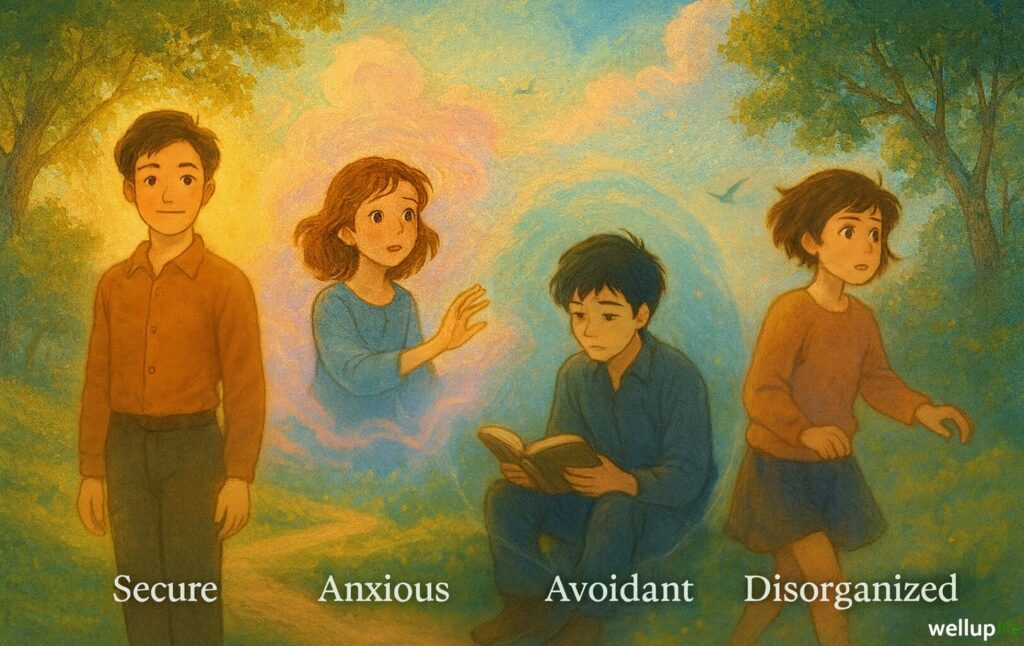
Why do we love the way we do?
Why do some people feel calm in relationships while others feel anxious, distant, or caught in a push-pull pattern? Why do certain partners make us feel safe, while others trigger old wounds we didn’t even know we carried?
Attachment theory offers a simple, powerful explanation.
First introduced by psychologist John Bowlby, attachment theory suggests that the way we were cared for in childhood creates an emotional blueprint for how we connect with others as adults 1SourceAttachment and Loss – John Bowlby (1969) ↗.
If our early environment felt warm, responsive, and predictable, we often grow into adults who trust easily and feel comfortable with closeness. If it felt inconsistent, distant, or overwhelming, we may learn to protect ourselves—either by clinging, withdrawing, or constantly scanning for emotional danger.
The beautiful truth is this:
Attachment isn’t about blaming the past—it’s about understanding our patterns so we can create healthier, more secure relationships today.
Whether you often feel anxious in love, prefer distance, struggle with mixed signals, or feel generally balanced… your attachment style holds the key to understanding why.
This beginner-friendly guide breaks down the theory in simple language, helps you understand the four attachment styles, and shows how these patterns influence the way you love, communicate, and connect. And if you’re unsure where you fit, don’t worry—we’ll help you figure that out along the way with an attachment style quiz.
Let’s start by understanding what attachment theory really means and how these emotional patterns first take shape.
Attachment theory is a psychological framework that explains how humans form emotional bonds—and how these early bonds create the patterns of trust, closeness, and connection we carry into adulthood. The concept was first introduced by psychologist John Bowlby, who proposed that our earliest relationships become the blueprint for how we love.
Later, researcher Mary Ainsworth expanded on Bowlby’s ideas through her influential Strange Situation study, which identified distinct patterns of attachment based on caregiver responsiveness 2SourceAinsworth's Strange Situation Procedure: The origin of an instrument ↗.
At its core, attachment theory says something very human:
We are wired for connection.
From the moment we are born, we look for someone who will protect us, soothe us, and respond to our needs. When a caregiver consistently shows up with warmth and attentiveness, a child learns,
When care is unpredictable, distant, or overwhelming, the child learns a different message—one that often echoes into adulthood.
Over time, these early experiences solidify into an emotional “blueprint.”
This blueprint quietly influences:
Attachment theory isn’t about labeling people as “good” or “bad.” It simply helps us understand why certain patterns show up again and again, even when we desperately want to change them. Our goal isn’t to blame the past—it’s to understand the past so we can feel freer in the present.
Knowing your attachment style can bring immense clarity.
It helps you recognize your triggers, communicate more honestly, and build relationships that feel supportive rather than overwhelming. And most importantly, it reminds you that emotional patterns can evolve. With awareness, healing, and healthier relationships, attachment can become more secure over time.
Before we explore the four attachment styles, let’s first understand how these patterns developed in the first place.
Attachment styles begin forming in early childhood, shaped by how our caregivers responded to our emotional and physical needs. Babies don’t have words or reasoning—they understand the world through experience. Safety, comfort, and emotional connection are communicated through tone, touch, presence, and consistency.
When a caregiver shows up with warmth, steadiness, and responsiveness, a child learns:
“I can trust. I am safe. Someone will be there when I need them.” 3SourceThe Role of Caregiver-Child Attachment in Early Development. ↗
This steady foundation becomes the root of secure attachment.
When caregiving is inconsistent—sometimes warm, sometimes withdrawn—the child adapts by becoming hyper-aware of the caregiver’s moods and reactions. They may learn to cling, protest, or constantly seek reassurance. This creates the groundwork for anxious attachment.
When caregiving is emotionally distant or discourages emotional expression, the child may learn to suppress their needs, rely only on themselves, and stay guarded. Over time, this shapes avoidant attachment.
And when caregiving is frightening, unpredictable, or chaotic, the child experiences both a desire for closeness and fear of it. This internal conflict often develops into disorganized attachment.
In each case, the child’s nervous system adapts to survive their emotional environment.
These early adaptations eventually become the emotional “rules” we follow in adult relationships—how we love, how we react, how we protect ourselves, and how we seek closeness.
But here’s the part most people never hear: Attachment patterns are not destiny.
They are learned responses, not fixed identities, and they can be reshaped with awareness, healing, and healthier relational experiences.
Now that we understand how attachment develops, we can look at the four main attachment styles that shape how people connect in adulthood 4SourceBartholomew & Horowitz – Adult Attachment Styles (1991) ↗. Each style reflects a different pattern of seeking closeness, handling emotions, and responding to relationship challenges.
These styles aren’t labels you’re stuck with—they’re simply patterns learned early in life, often without awareness. By understanding them, you gain clarity about your own needs, behaviors, and triggers, as well as greater compassion for the people you love. Let’s explore each style in a simple way, starting with the most secure pattern.
Secure attachment forms when a child grows up with caregivers who are mostly warm, consistent, and emotionally available. When a child’s needs are met with steadiness and reassurance, they learn a simple truth: “I can depend on others, and others can depend on me.” This early sense of safety becomes the foundation for secure attachment in adulthood.
People with secure attachment tend to feel comfortable with closeness. They can express their needs clearly, listen with openness, and communicate without fearing rejection or abandonment. In relationships, they trust easily—not blindly, but with a grounded belief that connection is meant to feel safe rather than confusing. They can be affectionate without becoming dependent, and independent without becoming distant.
Conflict doesn’t shake their sense of security. Instead of withdrawing, attacking, or overreacting, they focus on understanding and resolving the issue. They assume goodwill rather than threat, which allows them to repair and reconnect with ease. Their emotional world feels steady, flexible, and responsive—not reactive.
Secure attachment often shows up through small but important behaviors: checking in, offering comfort, apologizing when wrong, and giving reassurance naturally. Their presence tends to feel calm and grounding—like someone you can lean on without fear of being judged or abandoned.
And the encouraging part? Even if you didn’t grow up securely attached, secure attachment is something you can move toward. Many adults develop “earned security” through awareness, self-healing, and supportive relationships. Secure attachment isn’t about perfection—it’s about consistency, honesty, emotional safety, and the willingness to understand both yourself and your partner.
Anxious attachment forms when a child receives love inconsistently—warm and attentive at times, distant or unpredictable at others. This creates a deep desire for closeness mixed with an underlying fear that love might disappear. As adults, people with anxious attachment often enter relationships with an open heart, but also with a heightened sensitivity to signs of withdrawal or rejection.
For someone with this style, relationships can feel like an emotional rollercoaster. They crave closeness, reassurance, and connection, yet worry that their partner may not feel the same way. Small changes—delayed replies, shifts in tone, reduced affection—can trigger intense self-doubt or overthinking. Their mind tends to fill in the gaps quickly, often assuming the worst long before anything is actually wrong.
Anxiously attached individuals may struggle with emotional balance. They love deeply and express their feelings freely, but may also feel easily overwhelmed by uncertainty. They might check in frequently, seek verbal reassurance, or become distressed when a partner seems distant. It isn’t neediness—it’s a pattern learned when emotional safety felt unpredictable, and the nervous system became wired to scan for threats.
Despite these challenges, people with anxious attachment have incredible strengths. They are empathetic, emotionally intuitive, loyal, and deeply committed partners. With awareness and a supportive environment, their emotional intensity transforms into emotional depth. Over time, many learn to self-soothe, communicate needs clearly, and build relationships where closeness feels safe rather than fragile.
Anxious attachment is not a flaw—it’s an adaptation to early experiences. And with healing, secure and steady love becomes absolutely possible.
Avoidant attachment develops when a child learns—often very early—that expressing needs or seeking comfort doesn’t lead to connection. Their caregivers may have been loving in practical ways but emotionally distant, overwhelmed, or dismissive of vulnerability. Over time, the child adapts by becoming self-reliant, suppressing emotions, and minimizing their need for closeness. This creates the foundation for avoidant attachment in adulthood.
People with avoidant attachment value independence deeply. They are often strong, capable, and composed, but they may struggle with emotional intimacy. While they care for others, closeness can feel overwhelming or intrusive, and they may pull back when someone gets “too close.” It’s not that they don’t want love—they simply learned to feel safest when they rely on themselves.
In relationships, avoidantly attached individuals tend to keep a certain emotional distance. They may avoid deep conversations, hesitate to share vulnerabilities, or shut down during conflict. When stress rises, they often retreat into themselves, needing space to regain a sense of control. Even partners who love them can feel like they’re being kept at arm’s length.
Internally, avoidant individuals often experience emotions more intensely than they show. But instead of expressing them outwardly, they manage feelings privately or push them aside. This can create misunderstandings in relationships, especially when their calm exterior is misinterpreted as indifference.
Yet, avoidant attachment comes with strengths too. These individuals are steady, independent thinkers, and reliable in practical situations. When they begin to feel safe, they slowly open up—sometimes in small but significant ways that reflect genuine trust. With awareness and patience, avoidant individuals can learn to stay present during emotional moments, share their inner world more openly, and form secure, supportive bonds.
Avoidant attachment isn’t a lack of love—it’s a protective strategy that once helped someone survive emotional disconnection. With understanding and gentle connection, even this pattern can soften into deeper, more secure intimacy.
Disorganized attachment forms when a child grows up in an environment that feels both comforting and threatening. The caregiver—the person the child turns to for safety—may also be a source of fear, unpredictability, or emotional chaos. This creates a painful internal conflict:
“I want closeness, but closeness doesn’t feel safe.”
Because the child doesn’t know how to protect themselves while also seeking connection, their nervous system never finds a stable pattern. As adults, this unresolved tug-of-war often shows up as mixed signals, emotional overwhelm, or sudden shifts between craving closeness and pushing it away.
People with disorganized attachment usually have a sensitive, perceptive emotional world. They feel deeply, but they may not have learned healthy ways to regulate or express those feelings. Intense emotions—fear, sadness, anger, longing—can come in waves, leaving them unsure of how to respond or how others will respond to them. Relationships can feel confusing: they desire intimacy, yet fear being hurt; they want reassurance, yet panic when someone gets too close.
This pattern often shows up as:
But behind these responses is not a lack of love—it’s a nervous system shaped by early unpredictability. People with disorganized attachment are often incredibly intuitive, compassionate, and insightful. Their emotional intensity, once understood and supported, becomes a powerful strength.
Healing this attachment style is absolutely possible. It often begins with recognizing the pattern, learning emotional regulation skills, and experiencing relationships where safety is consistent and predictable. With time, support, and self-awareness, the inner chaos gradually settles, allowing space for more secure, steady, and nurturing love.
Disorganized attachment is not a flaw—it is a survival response to a confusing emotional environment. And understanding it is the first step toward creating the kind of relationships that bring calm instead of conflict, and safety instead of fear.
Our attachment style doesn’t just shape how we loved as children—it influences how we communicate, connect, and handle emotions as adults 5SourceHazan & Shaver – Romantic Love as Attachment (1987) ↗. These patterns show up quietly in everyday moments: how we reach for closeness, how we pull away, how we seek reassurance, or how we respond when someone disappoints us. While every person is unique, attachment styles tend to guide how we behave in relationships in a few key areas.
Secure individuals feel comfortable being close without losing themselves.
Anxious partners seek closeness intensely and fear losing it.
Avoidant partners value independence and may feel overwhelmed by too much intimacy.
Disorganized individuals struggle with both desires at once—wanting closeness but fearing it too.
These patterns can create harmony or tension depending on the match between partners’ needs and comfort levels.
Those with secure attachment usually express their needs clearly.
People with anxious attachment may express needs emotionally or urgently.
Avoidant individuals may struggle to articulate needs at all, often minimizing them.
Disorganized individuals may send mixed signals, unsure whether to reach out or pull back.
Communication becomes easier when partners understand these patterns rather than taking them personally.
Attachment styles strongly shape conflict reactions:
Understanding these responses can transform conflict from something threatening into something meaningful and manageable.
Attachment creates “filters” for how we read others’ actions.
A secure person sees a delayed message as normal.
An anxious person might interpret it as rejection.
An avoidant person might see it as pressure.
A disorganized person might feel a rush of both fear and hope.
These interpretations aren’t character flaws—they’re emotional reflexes shaped long before adulthood.
Secure attachment builds trust slowly and naturally.
Anxious attachment worries that trust will be broken.
Avoidant attachment fears losing independence.
Disorganized attachment struggles with trust on both sides—trusting others and trusting themselves.
With awareness and compassion, partners can learn each other’s triggers and create a more stable foundation.
Understanding how attachment styles shape relationships isn’t about labeling yourself. It’s about increasing clarity, reducing conflict, and building more conscious ways of loving. And the best part? No matter your attachment style, you can learn new patterns that bring more stability, safety, and emotional ease into your relationships.
Yes—attachment styles can absolutely change.
They are not fixed traits or personality labels; they are learned emotional patterns. And anything learned can be unlearned, rewired, or reshaped over time.
Your attachment style formed in response to the environment you grew up in. If closeness felt safe, you learned to trust it. If it felt inconsistent, distant, or frightening, you learned to protect yourself. These early responses weren’t choices—they were adaptations. They helped you survive emotionally with what you had.
But adulthood gives you something you didn’t have then:
awareness, language, autonomy, and the ability to choose healthier environments.
Attachment patterns begin to shift when you start noticing them—when you pause long enough to ask, “Why do I react this way?” or “What part of me is feeling unsafe right now?” That moment of awareness is often the first step toward security.
Healing also happens through experiences that contradict the old pattern. When someone shows up consistently, listens without judgment, apologizes when they hurt you, or stays calm during conflict, your nervous system slowly learns: “This is different. I don’t need to protect myself the same way anymore.”
Therapy, journaling, mindfulness, and emotionally safe relationships all support this shift. Over time, people with anxious attachment learn self-soothing and trust; avoidant individuals learn to let others in; and those with disorganized attachment learn emotional regulation and consistency. These changes don’t happen overnight, but they are entirely possible with patience and the right support.
Researchers call this earned secure attachment—the idea that security isn’t something you’re either born with or not. It’s something you develop through healing, courage, and conscious connection.
Your past might explain your patterns, but it doesn’t define your future. With awareness, compassion, and practice, anyone can move toward a more secure way of loving—and be loved in return.
Moving toward secure attachment isn’t about becoming perfect or eliminating your emotional reactions. It’s about building a new internal experience of safety—slowly, consistently, and compassionately. Security grows when you learn to understand your emotions, communicate your needs, and create relationships where honesty and stability feel normal instead of risky.
Here are some ways people begin shifting toward secure attachment:
The moment you can name your reactions—pulling away, overthinking, shutting down, clinging—you begin loosening their power. Awareness helps you pause before repeating an old pattern. Instead of saying, “This is just who I am,” you begin to recognize, “This is a learned response—and I can choose differently.”
Secure attachment is rooted in honest, calm communication.
You don’t have to get it perfect. Start small:
The more you express your needs openly, the less they build up into fear, anger, or confusion.
Your body holds your attachment patterns. Simple practices like deep breathing, grounding exercises, journaling, or taking a short walk can help regulate overwhelming emotions. When your nervous system feels calmer, your reactions become clearer, kinder, and more intentional. Learning to regulate your nervous system is a key part of developing secure attachment 6SourceBrain mechanisms underlying the impact of attachment-related stress on social cognition ↗.
Healing often happens through small moments that contradict old fears:
Each of these moments rewires a bit of your emotional blueprint, teaching you that closeness doesn’t have to hurt and independence doesn’t have to isolate you.
You don’t need perfect partners or friends—you need consistent ones.
People who communicate honestly, apologize when needed, respect boundaries, and show emotional steadiness can help you develop security over time. Safe relationships are not a luxury; they are medicine for old attachment wounds.
Attachment patterns were formed in childhood, long before you had control over them. Healing begins when you stop shaming yourself and start understanding yourself. Every step forward—every moment of awareness, every honest conversation, every calm response—is meaningful progress.
Moving toward secure attachment doesn’t mean never feeling anxious, avoidant, or overwhelmed. It means recognizing those feelings and responding with clarity instead of fear. With patience and continued practice, you can build relationships that feel steady, nurturing, and emotionally safe—no matter where you started.
Understanding your attachment style is one of the most empowering steps you can take toward healthier, more secure relationships. It gives you language for your emotions, clarity for your patterns, and compassion for the parts of you that learned to protect yourself long before you knew how to explain what you felt.
If you’re unsure which attachment style fits you best—or if you see pieces of yourself in more than one pattern—that’s completely normal. Many people blend traits, especially during stress, fights, or new relationships. A structured assessment can help you understand your core style more clearly.
To help you gain that clarity, we’ve created a simple, beginner-friendly quiz designed to reflect how you show up in relationships. This quiz is inspired by established attachment measurements such as the Experiences in Close Relationships (ECR) scale 7SourceExperiences in Close Relationships Scale (ECR) ↗. It takes just a few minutes and gives you a personalized explanation of your patterns, strengths, and areas for growth.
Ready to understand your attachment style more deeply?
Take the quiz and discover the emotional blueprint behind the way you love.
Get your personalized result + daily tips delivered straight to your inbox!
Understanding your attachment style is more than identifying a pattern—it’s a step toward understanding yourself with greater compassion. The way you love today was shaped long before you had words for what you felt. These patterns were not choices or flaws; they were adaptations your younger self made to feel safe.
The good news is that attachment is not fixed. With awareness, patience, and healthier experiences, you can gradually move toward a more secure, grounded way of loving. You can learn to communicate more clearly, soothe yourself during stress, and build relationships that feel steady and safe instead of confusing or overwhelming.
Whether your results revealed a secure foundation or a style that still carries old wounds, remember this:
You are capable of growth, connection, and emotional healing.
Every moment of awareness is progress. Every honest conversation is healing. Every step toward vulnerability is a step toward deeper connection—with yourself and with others.
Your attachment style explains where you’ve been, but it doesn’t define where you’re going. With intention and kindness toward yourself, you can create a more peaceful, secure, and fulfilling way of loving—one that supports the life and relationships you truly want.
Read Next: The 5 Love Languages: How to Make Your Partner Feel Truly Loved
At Wellup Life, we are dedicated to providing accurate and reliable content based on credible sources, including peer-reviewed studies and expert analyses. Each piece is thoroughly fact-checked to meet high editorial standards. To learn more, explore our editorial process.
Editorial Standards Team
The WellUpLife Editorial Team creates evidence-based resources on self-improvement, emotional health, and everyday wellness. We prioritize trusted sources, balanced insights, and responsible guidance in every article.

Written By:

Written By:

Written By:

Written By:

Written By:

Written By:

Written By:

Written By:

Written By:

Written By:

Written By:

Wellup Life is your space for personal growth, wellness, and mindful living. From self-improvement and productivity to spirituality and relationships, we share practical insights and timeless wisdom to help you live with clarity, balance, and purpose.
Copyright © 2024 – Wellup Life — All rights reserved