Physical Address
304 North Cardinal St.
Dorchester Center, MA 02124

Physical Address
304 North Cardinal St.
Dorchester Center, MA 02124
Written By:
Reviewed By:

It’s late at night, and your mind just won’t stop running. You’re lying in bed, scrolling through thoughts instead of your phone — wondering if your plans will work out, if you’ll ever feel “ready,” or if something might go wrong tomorrow. The room is quiet, but inside your head, it’s chaos.
We’ve all been there. The truth is, worrying about the future is almost built into us. Our brains evolved to predict danger, to keep us safe. But in today’s world, that same instinct often turns against us. Instead of fighting tigers, we fight overthinking — playing out imaginary “what ifs” that never end.
Psychologists call it future anxiety — the mental tug-of-war between wanting control and knowing we don’t have it. It drains our peace, steals our focus, and makes us live everywhere except the present moment.
Yet, centuries ago, long before therapy apps or self-help books, a group of philosophers faced the same struggle. They didn’t have social media or deadlines, but they did have uncertainty, loss, and fear of what’s next. Their answer? Stoicism.
Stoicism isn’t about pretending not to care or “staying positive.” It’s about learning to see clearly — to separate what you can control from what you can’t, and to find calm even when life feels unpredictable. As Seneca wisely said, “We suffer more often in imagination than in reality.” SourceSeneca, Letters from a Stoic
In this guide, we’ll explore how Stoic wisdom can help you stop worrying about the future and find peace in an uncertain life. You’ll discover timeless principles, practical techniques, and gentle mindset shifts that can help you live with more peace, presence, and confidence — even when the future feels uncertain.
Because the truth is, the future will always be unpredictable. But your response to it? That’s completely within your control.
Let’s be honest — worrying feels like something we should do.
It makes us feel prepared, responsible, maybe even in control. If we think about every possible outcome, maybe we can prevent the bad ones… right?
But in reality, worry is often our mind’s way of rehearsing pain that hasn’t even happened. We create entire stories in our heads — stories about failure, loss, rejection, or uncertainty — and our bodies respond as if they’re real.
From an evolutionary perspective, worrying once had a purpose. Early humans who anticipated danger — like a storm or a predator — were more likely to survive. Our brains still carry that wiring, even though most of today’s “dangers” are emotional or social rather than physical.
That’s why your heart races before a big meeting or your stomach knots before an uncertain result. Your brain can’t tell the difference between a real threat and an imagined one — it’s just trying to protect you.
But here’s the catch: the more we try to control the uncontrollable, the more anxious we become. The human mind hates uncertainty, so it fills in the blanks with worst-case scenarios. And over time, this habit of mental time travel — jumping into the future again and again — robs us of our peace today.
Constantly worrying about “what might happen” doesn’t just drain your mental energy — it shapes your life in subtle, painful ways:
Seneca captured this beautifully over 2,000 years ago:
“He suffers more than necessary, who suffers before it is necessary.”
SourceSeneca, Moral Letters to Lucilius
From a Stoic perspective, worrying is energy spent on what you can’t change — a misuse of your inner strength. Stoicism teaches that peace comes not from predicting the future, but from mastering your response to it.
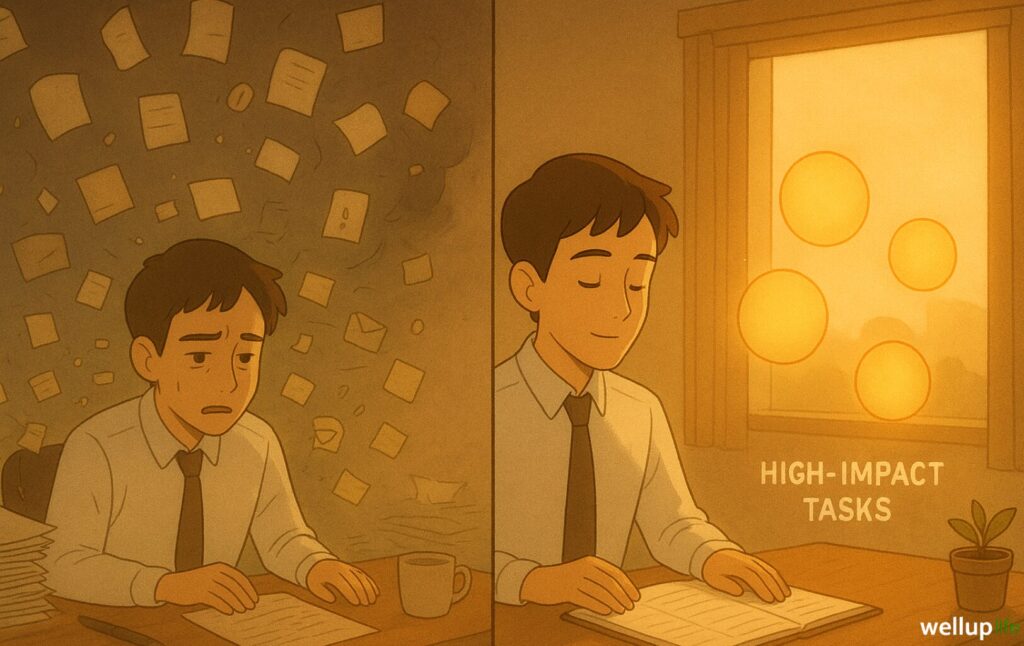
Instead of asking, “What if everything goes wrong?” the Stoic asks, “What can I do right now that’s within my control?” This simple question shifts our entire perspective. It shifts our mind from fear to focus, and to the point where the real calm begins.
To understand how the Stoics managed to stay grounded in a world full of uncertainty, let’s explore the foundation of their philosophy — timeless principles that can help us stop worrying and start living.
When the world feels unpredictable, our minds crave control.
We want guarantees — that our plans will work, that people will treat us fairly, that tomorrow will unfold exactly how we expect. But Stoicism begins with a simple, life-changing truth: most of what happens in life is not up to us.
The Stoics built their entire philosophy around this understanding — that peace comes from recognizing the boundary between what you can influence and what you cannot.
Let’s explore the first and most essential Stoic principle:
Imagine you’re waiting for an important email — maybe a job offer, college result, or reply from someone you care about. You refresh your inbox again and again, heart racing, mind spinning.
No new message. You start wondering what you did wrong, what might happen next, or whether you should’ve said something differently.
That’s the perfect moment to remember the Dichotomy of Control, a core teaching from the Stoic philosopher Epictetus, who said:
“Some things are up to us, and some are not.”
SourceEpictetus, Enchiridion
This idea sounds simple — almost too simple — yet it holds the key to emotional freedom.
When you truly internalize this distinction, something powerful happens: your mind stops fighting battles it can’t win.
You still care, you still try, but you stop suffering over the things that don’t belong to you. You focus your energy on what’s in your hands — your mindset, your actions, your present effort — and you let go of everything else with quiet strength.
You can’t control whether the economy changes, but you can control how you manage your skills and attitude. You can’t control if someone likes you, but you can control how you show up — with integrity and kindness. You can’t control the results, but you can control the work you do today.
That’s Stoic freedom — not indifference, but peaceful participation in life. You act fully where you have power, and you surrender gracefully where you don’t.
As Epictetus reminded his students, peace is found not by changing the world, but by changing how we relate to it.
Once we understand what’s truly in our control, the next Stoic step is learning to accept whatever life brings with grace — a practice beautifully captured in the principle of Amor Fati, or “Love of Fate.”
Once you realize how little you control, the next question naturally arises: What do I do with everything else — the unpredictable, unfair, and unexpected parts of life?
For the Stoics, the answer wasn’t resistance. It was acceptance — and even love.
The phrase “Amor Fati” comes from Latin, meaning “love of fate.” It’s the art of embracing everything that happens — not just the pleasant, but also the painful — as something essential to your journey.
“Accept whatever comes to you woven in the pattern of your destiny, for what could more aptly fit your needs?”
SourceMarcus Aurelius, Meditations
Marcus Aurelius, Rome’s philosopher-emperor, wrote these words during times of immense pressure and loss. He wasn’t asking us to enjoy pain — he was teaching us to trust life’s unfolding, to believe that every event holds value, even if we can’t see it yet.
When something unwanted happens — a rejection, a delay, a closed door — our first instinct is to resist. We say, “Why me?” or “This isn’t fair.”
But Stoicism invites us to shift that inner dialogue:
This simple reframing turns suffering into strength. You stop seeing life as happening to you and start seeing it as happening for you.
Even the challenges you didn’t ask for can become teachers.
A failure builds humility.
A loss builds gratitude.
A detour leads to something better.
That’s Amor Fati — loving your fate, not because it’s easy, but because it’s yours.
Whenever something doesn’t go your way, take a quiet breath and say to yourself:
“I choose to love this too.”
It’s a small sentence, but it rewires your mind toward peace. Over time, this habit strengthens your emotional muscles — turning frustration into acceptance, and acceptance into calm confidence.
Once we learn to accept life as it comes, the next Stoic step is learning where true peace exists — not in yesterday or tomorrow, but right here, in the present moment.
Have you ever noticed how most of your worries aren’t about now, but about what might happen later?
We worry about what people will think, what might go wrong, or how things might unfold. The irony is, while our minds are busy imagining the future, life is quietly happening in the present — and we’re missing it.
The Stoics understood this deeply. Marcus Aurelius wrote:
“Confine yourself to the present.”
To the Stoics, the present moment is the only reality we ever truly possess. The past is memory, the future is imagination — both exist only in our minds. Worrying about tomorrow doesn’t make it safer; it only makes today harder.
When we’re fully present, we see life clearly — not through the fog of fear or expectation.
We make better decisions.
We respond calmly.
We actually live instead of just thinking about living.
Epictetus reminded his students that our power lies in this moment — in choosing how we think, speak, and act right now. That’s where control exists. That’s where peace is found.
You can’t rewrite yesterday, and you can’t live tomorrow early — but you can meet today with awareness and intention.
Next time you find yourself overthinking the future, pause and take one slow, steady breath.
Ask yourself:
“What’s actually happening right now?”
Feel your breath. Notice your surroundings. Bring your attention back from what might happen to what is happening.
You’ll realize that, in this very moment, you are safe. You are breathing. You are here. That’s where life unfolds — one present moment at a time.
Once you’ve learned to stay grounded in the present, Stoicism offers one more profound tool for easing anxiety about the future — a practice known as Negative Visualization.
At first glance, “negative visualization” might sound pessimistic — like the Stoics were asking us to imagine everything going wrong.
But that’s not the case at all. In fact, this practice is one of the most peaceful and liberating tools in Stoicism.
Negative visualization (premeditatio malorum) means consciously reflecting on what could go wrong — not to suffer twice, but to build calm readiness and gratitude for what you already have.
The Stoics believed that when we mentally rehearse possible challenges, we’re not being gloomy — we’re being prepared.
Seneca wrote:
“He robs present ills of their power who has perceived their coming beforehand.”
By imagining setbacks — losing a job, facing rejection, illness, or even death — we strengthen our emotional resilience. When something actually happens, we meet it calmly, not in shock or panic.
It’s like mental strength training — each scenario you visualize with calm acceptance becomes one less thing that can control your peace.
You don’t need to sit in darkness and picture tragedy. Instead, try this simple Stoic reflection:
This moment of awareness transforms fear into appreciation. Suddenly, the ordinary feels extraordinary — because you realize nothing is truly “ordinary” until it’s gone.
Negative visualization isn’t about being cynical. It’s about being realistic and grateful at the same time.
When you’ve already imagined losing something, you stop clinging to it out of fear. You learn to love without possession, to live without constant anxiety, and to accept life as it unfolds.
That’s the beauty of Stoicism — it doesn’t promise that bad things won’t happen; it simply teaches you that you’ll be strong enough when they do.
Now that we’ve explored Stoic principles like control, acceptance, and presence, let’s see how we can apply them practically — turning philosophy into everyday peace.
Knowing Stoic principles is one thing. Applying them is where real transformation happens. The beauty of Stoicism is that it’s not just philosophy — it’s a practical toolkit for modern life.
Here are simple, effective ways to use Stoic wisdom to calm future anxiety and stop overthinking tomorrow:
Example: You can prepare for a meeting or exam, but you can’t control the outcome. Stoic practice: do your best, then let go.
Example: Missing an opportunity might feel disappointing, but it could redirect you toward something better — a lesson, a new skill, or a different path.
Example: Instead of panicking about next week’s deadlines, focus fully on today’s work. You’ll notice your productivity and calm increase.
Example: Visualize losing a client, failing a test, or facing minor life inconveniences — then think, “I can handle this if it happens.”
By practicing these techniques consistently, you train your mind to respond to uncertainty with calm, clarity, and resilience, rather than fear or endless worry.
Key Takeaway:
Stoicism is not about detaching from life or ignoring problems. It’s about acting wisely within your power, letting go of what you cannot control, and cultivating peace no matter what the future holds.
Stoicism becomes truly powerful when we bring it into the ordinary moments of life. Its principles — focusing on what’s in our control, embracing fate, living in the present, and preparing for setbacks — aren’t just abstract ideas. They’re practical tools for handling work stress, relationships, health worries, financial uncertainty, and even the small annoyances of daily life.
Work can often be a major source of stress, especially when we focus on outcomes beyond our control. Stoicism teaches us to direct our energy toward what we can influence — our effort, preparation, and attitude — while letting go of what we cannot, such as others’ opinions or the final results.
For example, preparing thoroughly for a presentation or meeting allows you to act confidently. You cannot control how your boss or colleagues respond, but you can control the quality of your work and how you communicate it. By shifting focus to your effort rather than the outcome, stress decreases and performance improves.
Our health naturally worries us, especially when thinking about potential illnesses or future challenges. Stoicism encourages focusing on the aspects we can control — habits, routines, and self-care — and accepting what lies beyond our influence.
By committing to these habits, we gain a sense of agency and peace, knowing we are doing our best, even while acknowledging that some health outcomes are unpredictable.
Interpersonal connections are another area where Stoic thinking can reduce anxiety. While we cannot control others’ emotions, reactions, or choices, we can control how we act, communicate, and respond.
For instance, a disagreement with a friend or loved one can trigger worry or resentment. A Stoic approach focuses on acting with patience, honesty, and kindness, letting go of expectations about how others should behave. Over time, this mindset fosters healthier and more balanced relationships.
Financial uncertainty is a common source of future-related worry. Stoicism teaches us to plan, prepare, and act wisely while accepting that not all outcomes are within our control.
By focusing on what is controllable — your decisions, discipline, and planning — rather than the unpredictable economy or unforeseen expenses, you build resilience and confidence.
Even minor inconveniences — traffic jams, delayed trains, or canceled plans — can trigger stress and worry if we let them. Stoicism encourages us to see these moments as opportunities to practice patience, self-control, and presence.
By responding calmly to everyday challenges, you strengthen your ability to face larger uncertainties with the same mindset, ultimately reducing anxiety about the future.
Key Takeaway:
Applying Stoicism in daily life is not about avoiding problems or suppressing emotions. It’s about channeling your energy into what is within your control, embracing life as it unfolds, and responding to challenges — both big and small — with clarity, calm, and resilience.
When people first hear about Stoicism, they often misunderstand it. Many assume it’s about suppressing emotions, becoming detached, or ignoring life’s challenges. In reality, Stoicism is deeply human — it’s about cultivating resilience, clarity, and peace of mind in the face of uncertainty.
Here are some common questions and misconceptions that arise among people.
A common misconception is that Stoicism asks you to become indifferent, detached, or unemotional. In reality, Stoicism is about caring wisely. Stoics focus their energy on what they can control — their thoughts, actions, and attitudes — rather than wasting it on things beyond their influence. This approach doesn’t remove concern or responsibility; it simply prevents you from being consumed by unnecessary worry and anxiety.
Some people think practicing Stoicism means suppressing emotions or becoming emotionally “cold.” This is far from the truth. Stoicism encourages awareness of your emotions and teaches you to respond thoughtfully instead of reacting impulsively. Feeling fear, sadness, or frustration is completely natural, but through Stoicism, these emotions no longer dictate your peace of mind or spiral into anxiety about the future.
It’s easy to believe that constant worry is a sign of responsibility or foresight. Stoicism acknowledges the value of preparation but draws a clear line between productive planning and unproductive rumination. You can plan, organize, and anticipate challenges without letting fear of “what might happen” control your thoughts or steal your peace.
Some assume Stoicism is outdated and irrelevant to today’s fast-paced, complex world. While life now is very different from ancient Rome, human psychology hasn’t changed. The same Stoic practices — focusing on what’s in your control, embracing uncertainty, staying present, and mentally preparing for setbacks — are just as effective now. They help reduce stress, improve focus, and cultivate resilience in modern life’s unpredictable circumstances.
Another common worry is that being Stoic makes life joyless or rigid. In truth, Stoicism actually enhances life enjoyment. By letting go of fear, overthinking, and the obsession with outcomes, you open up space to fully experience and appreciate what you have right now. Moments with loved ones, small daily victories, or simply noticing beauty around you become richer and more meaningful when you approach life with calm, clarity, and presence.
By addressing these misconceptions, we see that Stoicism is not about being cold or indifferent. It’s a supportive framework for living with courage, clarity, and calm, helping us navigate the uncertainty of life without being overwhelmed by fear of the future.
Worrying about the future is something we all do, and it’s completely human. Our minds are wired to anticipate challenges, and it’s natural to feel anxious about uncertainty. But as we’ve explored in this guide, Stoicism offers timeless tools to transform fear into calm, overthinking into focused action, and anxiety into presence.
By understanding the Dichotomy of Control, we learn to direct our energy toward what we can influence and release what we cannot. Through Amor Fati, we embrace life as it unfolds, seeing even setbacks as opportunities for growth. By living in the present, we anchor ourselves in reality rather than being swept away by imagined “what ifs.” And with Negative Visualization, we build mental resilience and cultivate gratitude for what we already have.
Applying these principles in everyday life — at work, in relationships, with health, finances, and even minor daily frustrations — allows us to navigate uncertainty with clarity and confidence. Stoicism is not about detachment or suppressing joy; it’s about engaging fully with life while staying calm and grounded.
In the end, the future will always be uncertain. But your response to it is entirely in your hands. By adopting Stoic wisdom and applying these principles consistently, you can stop worrying about the future, live with more presence, and face life’s unpredictability with courage, clarity, and peace.
Read Next: Why Control Is an Illusion: Stoic Wisdom on Letting Go for Inner Peace