Physical Address
304 North Cardinal St.
Dorchester Center, MA 02124
Written By:

Published On: January 21, 2026
Last Updated On: February 15, 2026
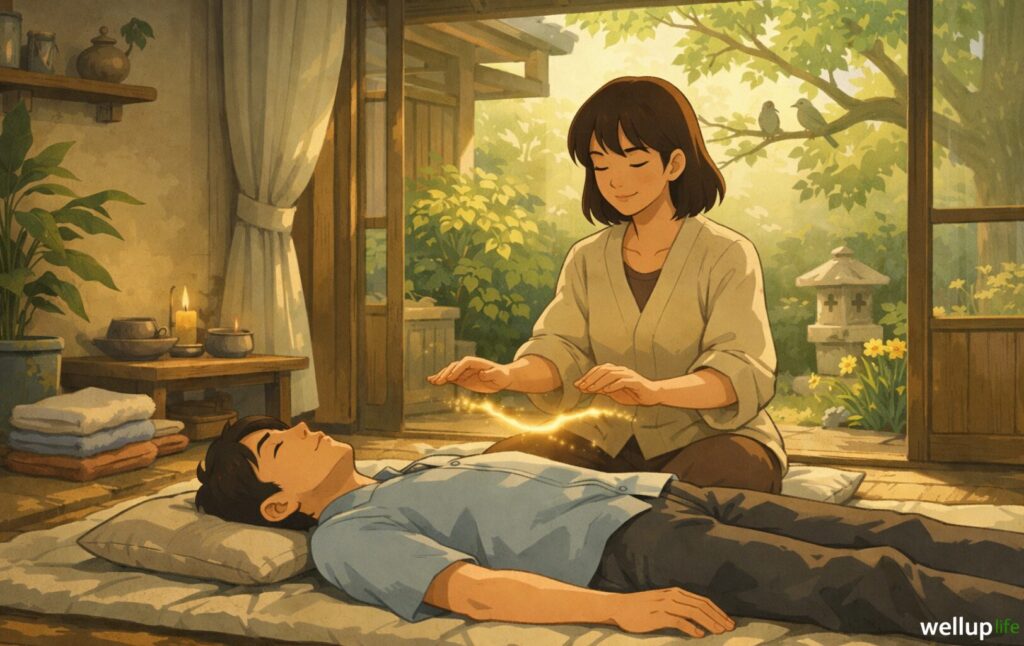
Reiki is a gentle, hands-on practice that has gained popularity worldwide, including in the United States, as a complementary approach to relaxation and emotional well-being. While it originated in Japan, Reiki is now offered in wellness centers, hospitals, and private sessions, helping people incorporate mind–body balance into their daily lives.
During a Reiki session, a trained practitioner places their hands lightly on or above the body, creating a calming environment that many describe as deeply soothing. Reiki is considered a complementary therapy, meaning it can enhance well-being alongside conventional medical care—but it is not a replacement for professional treatment.
People often try Reiki to relieve stress, ease tension, or simply feel more emotionally centered. While scientific research is limited, studies suggest Reiki may help improve mood, support relaxation, and provide comfort in both everyday life and clinical settings.
In this guide, you’ll learn what Reiki is, how it works, what to expect in a session, and how it may benefit your well-being, so you can decide whether this gentle practice fits your lifestyle.
Reiki is a practice that originated in Japan in the early 20th century, developed by Mikao Usui. The term Reiki comes from two Japanese words: “Rei” meaning universal, and “Ki” meaning life energy. Together, Reiki can be understood as “universal life energy”, emphasizing its focus on balancing the body’s natural energy to promote well-being.
Historically, Reiki combined elements of traditional Japanese spiritual practices and meditation, but it was formalized as a healing system by Usui. Today, Reiki is taught worldwide and adapted in many settings, from wellness centers to hospitals, to support stress reduction, emotional balance, and relaxation.
While Reiki has spiritual roots, it is not tied to any specific religion, making it accessible to people of all backgrounds. Its focus is on supporting the mind–body connection and helping individuals feel centered and calm 1SourceHistory and Practice of Reiki ↗.
Reiki is based on the idea that the body has a natural life force energy, often called Ki. Practitioners aim to balance this energy through gentle hand placements, creating a calm and supportive environment. The primary goal is not to treat disease directly, but to promote relaxation and emotional well-being.
Scientific perspectives suggest that Reiki works by triggering the body’s relaxation response, which can help lower stress hormones, slow heart rate, and reduce tension 2SourceRelaxation Response and Stress Reduction ↗.
During a session, recipients often report feelings of warmth, tingling, or deep calm. These experiences may help the mind shift into a more relaxed and balanced state, supporting emotional clarity and comfort.
While Reiki is not a substitute for medical care, research indicates it may help improve mood, reduce anxiety, and enhance a general sense of well-being when used as a complementary practice 3SourceEffects of Reiki on Anxiety and Well-Being ↗.
In short, Reiki works by creating a nurturing environment that encourages relaxation and emotional balance, supporting the body’s natural ability to maintain wellness.
A Reiki session is designed to be calm, gentle, and restorative. Most sessions last between 30 to 60 minutes, and the recipient remains fully clothed while lying on a massage table or sitting comfortably.
During the session, the practitioner places their hands lightly on or just above specific areas of the body. This gentle touch is meant to create a relaxing, supportive environment that encourages the mind and body to release tension. Many people report sensations such as warmth, tingling, or a feeling of deep calm, though experiences can vary from person to person.
Reiki sessions are often used to reduce stress, support emotional balance, and enhance overall well-being, and they can complement other wellness practices or medical care 4SourceWhat to Expect During a Reiki Session ↗.
After a session, recipients commonly feel more centered, relaxed, and emotionally refreshed, and some people choose to receive Reiki regularly as part of their self-care routine.
Reiki is primarily used as a complementary practice to support relaxation, emotional well-being, and overall balance. While it is not a medical treatment, many people report noticeable benefits when it is included in a wellness routine.
Common uses of Reiki include:
It’s important to note that Reiki is not a cure for disease, and its effects vary between individuals. Its main value lies in helping the mind and body relax, supporting emotional balance, and promoting a sense of inner calm.
Many people incorporate Reiki into their self-care routines regularly, using it as a tool for ongoing stress relief and emotional support rather than a one-time solution.
Reiki is a versatile practice, and over time, several types and variations have developed. Understanding the differences can help you choose the approach that best fits your needs.
1. Traditional Reiki (Usui Reiki)
2. Reiki Healing Therapy
3. Reiki Massage
4. Reiki Masters and Levels
5. Remote or Distant Reiki
Reiki’s variations allow it to adapt to different needs and preferences, from deep relaxation and stress relief to supportive therapy in hospitals or self-care at home.
Reiki can be helpful for a wide range of people, particularly those seeking stress relief, emotional balance, or gentle wellness support. It is suitable for anyone looking to enhance their mind–body connection and incorporate relaxation into their routine.
Potential beneficiaries include:
Reiki is generally safe for most people, including adults, seniors, and children. However, it is not a replacement for medical treatment. People with serious medical conditions should use Reiki alongside conventional healthcare rather than as a sole therapy.
In short, Reiki is most beneficial for those looking for gentle, supportive care for emotional, mental, or physical well-being, and for anyone open to a calming, restorative experience.
Reiki is often described as an energy-based healing practice, but its effects are still being studied, and scientific evidence remains limited. Researchers suggest that the benefits of Reiki may come from activating the body’s relaxation response, which can help lower stress hormones, reduce anxiety, and improve mood.
Some clinical studies have explored Reiki in hospital or palliative care settings, reporting potential benefits such as reduced anxiety, improved emotional comfort, and enhanced well-being for patients 5SourceReiki in Clinical Settings ↗.
However, it’s important to note:
In short, while Reiki’s mechanism may not be fully understood scientifically, studies support its role as a complementary practice that can help people feel calmer, more centered, and emotionally supported alongside conventional care.
Reiki has spiritual roots but is not tied to any specific religion. It can be practiced by anyone, regardless of beliefs, and focuses on relaxation and emotional balance rather than religious rituals.
Yes, Reiki can be performed at a distance, often called distant or remote Reiki. Some recipients report feeling relaxation or emotional comfort even without physical contact, though experiences may vary.
The frequency depends on your goals and needs. Many people start with weekly or biweekly sessions and adjust based on how they feel. Even a single session can provide noticeable relaxation.
Reiki is generally considered safe and non-invasive. Some people may feel temporary emotional release, light fatigue, or drowsiness after a session. It is not a substitute for medical care.
Reiki is not a medical treatment and should not replace professional healthcare. It may complement medical care by reducing stress, supporting emotional well-being, and enhancing relaxation, which can indirectly improve quality of life.
Reiki is a gentle, complementary wellness practice designed to promote relaxation, emotional balance, and overall well-being. While it is not a medical treatment, many people find that Reiki helps reduce stress, ease tension, and support a sense of calm and mental clarity.
Whether you are seeking a tool for self-care, emotional support, or a calming complement to conventional healthcare, Reiki offers a safe and accessible way to nurture the mind–body connection. Its practice is simple, non-invasive, and adaptable to different needs, making it a versatile option for anyone open to exploring holistic wellness.
At Wellup Life, we are dedicated to providing accurate and reliable content based on credible sources, including peer-reviewed studies and expert analyses. Each piece is thoroughly fact-checked to meet high editorial standards. To learn more, explore our editorial process.
Editorial Standards Team
The WellUpLife Editorial Team creates evidence-based resources on self-improvement, emotional health, and everyday wellness. We prioritize trusted sources, balanced insights, and responsible guidance in every article.
Medically Reviewed By:


Reviewed By:

Written By:
Written By:

Reviewed By:

Reviewed By:
Written By:

Reviewed By:

Written By:
Reviewed By:

Reviewed By:

Wellup Life is your space for personal growth, wellness, and mindful living. From self-improvement and productivity to spirituality and relationships, we share practical insights and timeless wisdom to help you live with clarity, balance, and purpose.
Copyright © 2024 – Wellup Life — All rights reserved