Physical Address
304 North Cardinal St.
Dorchester Center, MA 02124

Physical Address
304 North Cardinal St.
Dorchester Center, MA 02124
Written By:

Starting your morning with yoga isn’t about doing more — it’s about doing things more gently. And for beginners, that makes all the difference.
Mornings often begin with stiffness, a heavy body, or a rushing mind. You wake up, stretch a little, and still feel like your body hasn’t fully caught up with the day yet. If that sounds familiar, you’re not alone — and it’s exactly why yoga morning stretches for beginners can be so helpful.
You don’t need flexibility, long routines, or perfect poses to start practicing yoga in the morning. Even a few gentle stretches, done slowly and with awareness, can help release overnight stiffness, improve circulation, and bring a sense of calm before the day begins. The goal isn’t to “work out” — it’s simply to wake the body up with kindness.
This beginner-friendly morning yoga routine focuses on simple, safe stretches you can do at home, even if you’re new to yoga or haven’t moved much in a while. Whether you have five minutes or ten, these gentle morning yoga stretches are designed to help you feel lighter, more relaxed, and more present as you start your day.
When you wake up in the morning, your body is coming out of several hours of stillness. Muscles, joints, and connective tissues haven’t moved much overnight, which is why stiffness—especially in the back, neck, hips, and shoulders—is so common. For beginners, this stiffness can make mornings feel heavy and unmotivating.
Gentle morning stretching helps your body transition slowly from rest to activity. Instead of forcing movement or jumping straight into a busy day, stretching encourages blood flow, lubricates the joints, and signals the nervous system that it’s safe to wake up. This is especially important if you spend long hours sitting, working on screens, or feeling mentally tense.
For beginners, morning stretching matters because it:
Unlike intense workouts, morning yoga stretches are meant to be slow and supportive. They allow your body to open up at its own pace. Even a few minutes of gentle movement can help you feel more comfortable in your body and more centered in your mind.
Most importantly, starting your day with light stretching builds a positive relationship with movement. You’re not pushing or punishing your body — you’re simply listening to it. And for beginners, that mindset makes all the difference.
Before you begin your morning stretches, it helps to set the right mindset. Yoga isn’t something you “perform” — especially as a beginner. It’s something you experience; how you move matters far less than how you feel while moving.
First, remind yourself that you don’t need flexibility to do yoga. Stiffness in the morning is normal. Tight hamstrings, a rounded back, or limited movement don’t mean you’re doing it wrong — they’re simply your body’s starting point today.
Move slowly and comfortably. There’s no rush and no fixed shape you must reach. If something feels painful or sharp, ease out of it. Yoga stretches should feel like a gentle release, not a strain. Your breath is a good guide here — if you can breathe calmly, you’re likely moving at the right intensity.
Choose a space where you feel at ease. You can practice on a yoga mat, a carpet, or even on your bed if that feels more comfortable. Morning yoga for beginners isn’t about setup or perfection; it’s about making movement feel accessible.
Most importantly, listen to your body instead of your mind. Some mornings you’ll feel open and relaxed. Other days, you may feel stiff or tired. Both are completely okay. Yoga meets you where you are — not where you think you should be.
Starting with this gentle attitude makes your practice sustainable. When you begin with kindness, morning stretching becomes something you look forward to, not something you force yourself to do.
This routine is designed to be simple, slow, and supportive. You don’t have to do every stretch. Even 2–3 of these movements are enough on busy or low-energy mornings. Let your breath set the pace.

Sit comfortably or stand tall. Slowly tilt your head side to side, then make small shoulder rolls.
Why it helps:
Releases overnight tension in the neck and shoulders — areas that often feel tight after sleep and screen use.
Move gently. Avoid forcing any stretch.
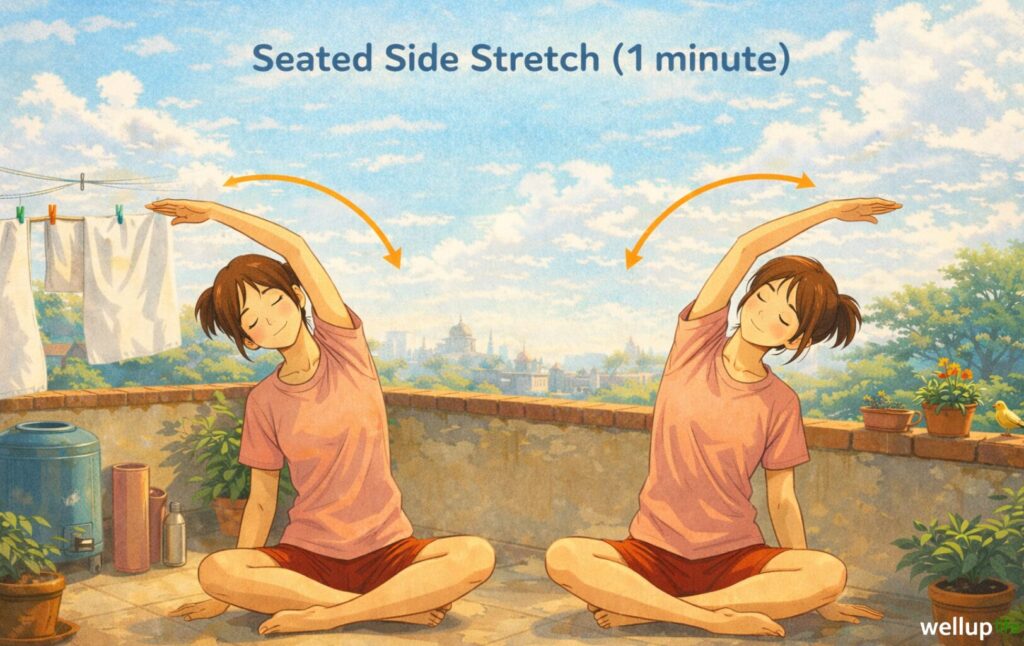
Sit cross-legged or on a chair. Raise one arm and gently stretch to the opposite side. Switch sides.
Why it helps:
Opens the sides of the body, improves breathing space, and helps you feel more awake without effort.
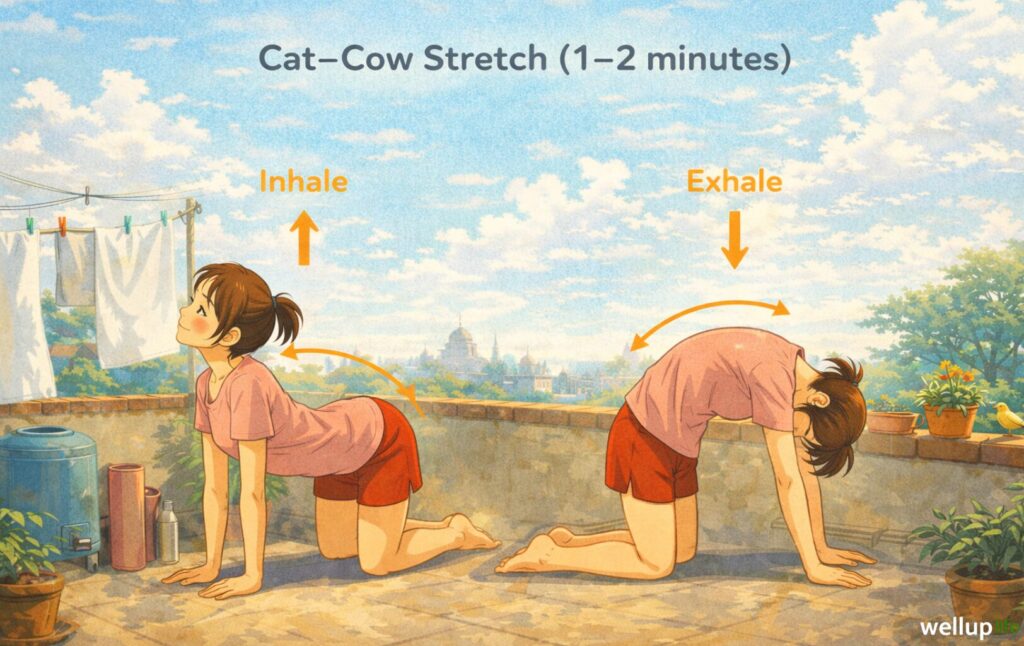
Come onto hands and knees.
Move slowly with your breath.
Why it helps:
Wakes up the spine, reduces back stiffness, and improves spinal flexibility — perfect for beginners.

Sit back on your heels, fold forward, and rest your forehead on the ground. Arms can be extended or relaxed by your sides.
Why it helps:
Calms the nervous system and encourages deep, relaxed breathing. A great pause if you feel sleepy or overwhelmed.

You can do this seated or standing. Fold forward softly, keeping knees bent if needed.
Why it helps:
Releases the lower back and hamstrings without strain. This stretch should feel soothing, not intense.

Sit tall and gently twist to one side, then the other. Keep the movement slow and controlled.
Why it helps:
Improves spinal mobility and helps circulation — especially helpful after hours of stillness.
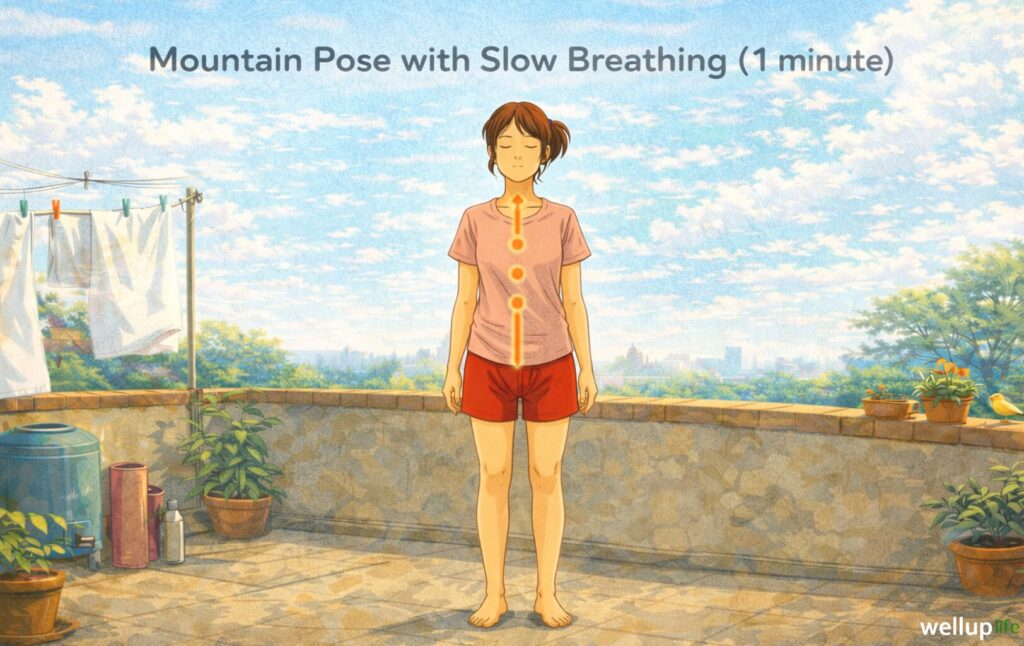
Stand comfortably, feet grounded. Take 3–5 slow, deep breaths.
Why it helps:
Brings a sense of balance and readiness. This is where you gently transition from practice into your day.
You don’t need to finish this routine to benefit from it. Morning yoga works best when it’s kind, flexible, and pressure-free. Let your body decide how much movement it needs today.
The real value of a gentle morning yoga routine isn’t felt in a single day — it shows up quietly, over time. When you move your body with awareness each morning, small changes begin to add up in ways that feel natural rather than forced.
Over time, these small daily moments of care reshape how you start your day. Not dramatically, but steadily — and in a way your body and mind can truly sustain.
Starting yoga in the morning should feel supportive, not stressful. But beginners often make a few small mistakes that can turn a gentle routine into something uncomfortable or discouraging. Being aware of these helps you practice more safely and enjoyably.
Your body is naturally stiff in the morning. Forcing deep stretches too early can strain muscles or joints. Morning yoga is about waking up, not pushing limits.
It’s common to focus so much on the movement that breathing becomes shallow or tense. If you notice your breath stopping, ease the stretch. Calm breathing is a sign you’re moving at the right intensity.
Images and videos can create unrealistic expectations. Flexibility varies from person to person — and even from day to day. Yoga isn’t about how a pose looks; it’s about how it feels.
Jumping straight into forward folds or twists without gentle preparation can feel uncomfortable. Simple movements like neck rolls or Cat–Cow help prepare the spine and joints.
Yoga works subtly. If you’re waiting for immediate flexibility or energy, it’s easy to feel disappointed. The benefits come from regular, gentle practice over time.
Morning yoga for beginners isn’t meant to exhaust you. If you finish feeling drained or sore, you’re likely doing too much. The goal is ease, not effort.
Avoiding these common mistakes helps keep your practice safe, sustainable, and enjoyable — so morning stretching becomes something you want to return to, not something you push through.
The biggest challenge with morning yoga isn’t flexibility or time — it’s consistency. And consistency doesn’t come from discipline alone. It comes from making the practice feel light, approachable, and kind.
Instead of aiming for a full routine every day, begin with just 3–5 minutes. One or two stretches done mindfully are enough. When the bar is low, it’s easier to show up — even on tired mornings.
Habits stick better when they’re linked to existing routines. Try stretching right after you wake up, after brushing your teeth, or before your morning tea. This removes the need to “decide” each day.
Some mornings you’ll feel open and motivated. Others you won’t. Give yourself permission to stop early or skip a pose. A flexible routine is more sustainable than a rigid one.
Yoga becomes a habit when it feels good emotionally, not when it looks perfect. Pay attention to how your body feels afterward — lighter, calmer, or simply more awake.
Missing a day doesn’t mean you’ve failed. Habits aren’t built through perfection; they’re built through returning. Just come back the next morning without judgment.
When yoga feels like a gentle check-in rather than a task, it naturally finds its place in your day. Over time, it stops being something you try to do — and becomes something you simply do.
Morning yoga doesn’t need to be intense, perfect, or time-consuming to be meaningful. For beginners, the real power of yoga morning stretches lies in their simplicity. A few gentle movements, done with awareness, can soften stiffness, calm the mind, and help you begin the day feeling more connected to your body.
What matters most isn’t how deeply you stretch or how consistently you follow a routine. It’s the intention to start your day with care rather than force. When you approach movement gently, your body responds with ease — and over time, that ease carries into the rest of your day.
If some mornings feel slow or unmotivated, that’s okay. Yoga isn’t about fixing yourself. It’s about meeting yourself as you are, and allowing the day to unfold from a calmer place.
Read Next: How to Improve Sleep Quality Naturally




Medically Reviewed By: