Physical Address
304 North Cardinal St.
Dorchester Center, MA 02124

Physical Address
304 North Cardinal St.
Dorchester Center, MA 02124
Written By:

Being in a long-distance relationship is not just about missing someone. It’s about missing ordinary moments—the small talks, spending time doing nothing together, the casual reassurance that comes from being physically close. Instead, you’re left with screens, time gaps, and a lot of thinking. Sometimes, there is too much thinking.
If you’re here, chances are you’ve asked yourself questions like:
Most long-distance relationship advice online either sounds overly romantic—“Love conquers all”—or overly rigid, with rules that ignore real emotions. But real relationships don’t work on slogans. They work on understanding, emotional safety, and honest effort from both sides.
Here’s the reality: distance doesn’t ruin relationships—confusion does. Unspoken expectations, mismatched communication styles, unresolved insecurity, and emotional loneliness are what slowly create cracks. When those issues are handled well, distance becomes manageable. When they’re ignored, even love feels exhausting.
This article is a practical, grounded guide to long-distance relationship tips that actually work. Not perfect-love advice. Not pressure to “stay strong” at all costs. Just clear, psychology-backed insights and realistic strategies to help you stay emotionally connected, protect your mental well-being, and decide—calmly—what’s right for you.
Whether you’re trying to make your relationship stronger or simply seeking clarity, you’ll find honest answers here—without judgment, without false hope, and without emotional shortcuts.
The short answer is: yes, they can—but not by accident.
Long-distance relationships don’t succeed simply because two people love each other. They work when both partners consistently meet each other’s emotional needs despite the physical distance. Psychological research shows that distance itself is not the deciding factor—relationship quality is.
A well-known study published in the Journal of Communication found that couples in long-distance relationships often report similar or even higher levels of emotional intimacy and communication quality compared to couples who live close to each other. Researchers observed that long-distance couples tend to engage in more intentional and meaningful conversations, which can strengthen emotional bonds SourceStafford, L., & Merolla, A. J. (2007). Idealization, reunions, and stability in long-distance dating relationships. Journal of Communication. .
This highlights an important truth: emotional closeness is built through responsiveness, not physical proximity.
Relationship researcher John Gottman explains that strong relationships are formed through what he calls “turning toward” moments—small, everyday choices to respond to your partner’s emotional bids. In long-distance relationships, these moments show up through:
Trust is built in very small moments, which I call sliding door moments.
 — John Gottman
At the same time, research also makes one thing clear: long-distance relationships are not automatically healthy or sustainable. Studies indicate higher stress and dissatisfaction when communication is inconsistent, expectations are unclear, or emotional effort is uneven between partners. Distance doesn’t create these issues—it magnifies them SourceSahlstein, E. (2004). Relating at a distance: Negotiating being together and being apart in long-distance relationships. Journal of Social and Personal Relationships. .
So when people ask, “Do long-distance relationships really work?”
A more honest question is: “Do both partners have the emotional maturity, communication skills, and shared direction to handle distance without losing emotional safety?”
When the answer is yes, distance becomes a manageable challenge.
When the answer is no, even constant texting and calling won’t prevent emotional disconnection.
Long-distance relationships don’t usually fall apart because of one big event. They wear down quietly—through misunderstandings, emotional fatigue, and unmet needs that go unspoken. Understanding these challenges clearly is essential because what you can name, you can manage.
Below are the most common—and most overlooked—challenges couples face in long-distance relationships.
One of the hardest truths about long-distance relationships is this: you can feel lonely even when communication is frequent.
Texting and calling keep you connected, but they don’t always meet deeper emotional needs like comfort, reassurance, or shared presence. Research on emotional support shows that physical absence can intensify feelings of isolation, especially during stress or vulnerability SourceBurleson, B. R. (2003). Emotional support skills. In J. O. Greene & B. R. Burleson (Eds.), Handbook of Communication and Social Interaction Skills. .
This often leads to confusion: “Why do I still feel empty even though we talk so much?”
The issue isn’t lack of communication—it’s lack of emotional attunement.
Distance creates gaps. And the human mind tends to fill gaps with stories—often negative ones.
Delayed replies, short messages, or changes in tone can quickly trigger overthinking:
Psychological studies on uncertainty in relationships show that a lack of contextual cues increases anxiety and misinterpretation, especially in emotionally invested bonds SourceKnobloch, L. K., & Solomon, D. H. (1999). Measuring the sources and content of relational uncertainty. Communication Studies. .
Without conscious effort, couples can get trapped in cycles of assumption rather than clarity.
Not everyone connects in the same way. Some people feel secure with daily check-ins; others need longer, deeper conversations less frequently.
Problems arise when:
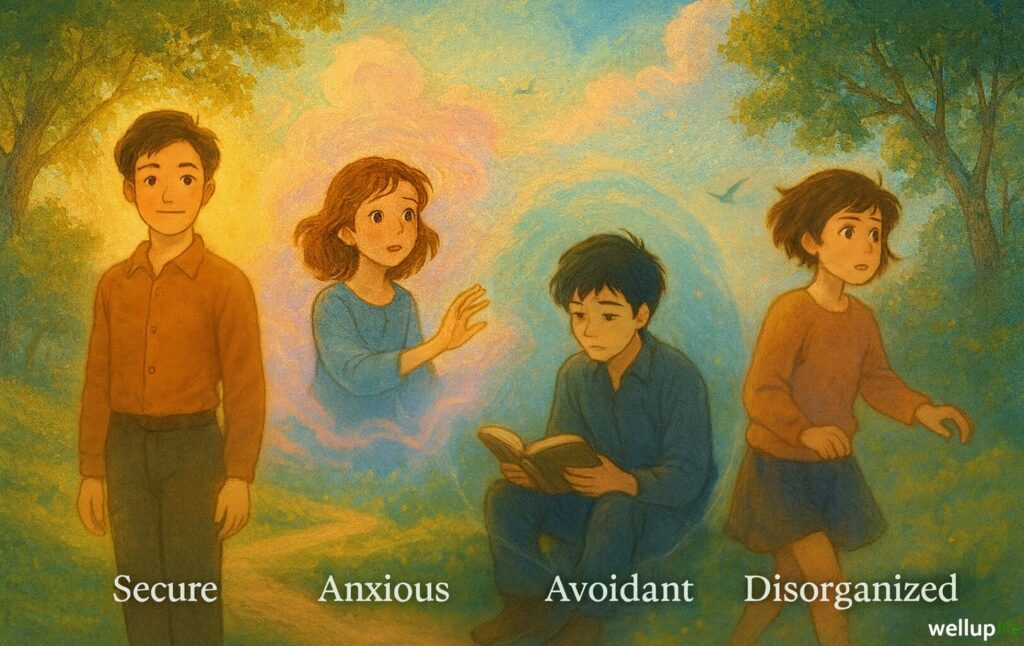
Research on attachment styles shows that people with anxious attachment may seek more frequent contact, while avoidant partners may withdraw under pressure—creating a push–pull dynamic that distance intensifies SourceMikulincer, M., & Shaver, P. R. (2007). Attachment in adulthood: Structure, dynamics, and change. .
This isn’t about right or wrong—it’s about unspoken differences.
Trust in long-distance relationships is tested not by infidelity alone, but by uncertainty.
You don’t see each other’s daily lives. You don’t share the same social environment. This absence can quietly activate insecurity, even in otherwise healthy relationships.
As attachment theorist John Bowlby emphasized, humans are wired to seek proximity for safety. When proximity is removed, the nervous system often looks for reassurance in other ways—sometimes through checking, questioning, or control.
If not addressed consciously, this can erode trust over time.
One of the most damaging—but least discussed—challenges is not knowing where the relationship is going.
Long-distance relationships need a sense of movement:
Studies show that uncertainty about a relationship’s future is strongly linked to emotional distress and dissatisfaction, especially in long-distance contexts SourceSahlstein, E. (2004). Relating at a distance: Negotiating being together and being apart. Journal of Social and Personal Relationships. .
Without direction, distance begins to feel less like a phase—and more like a trap.
None of these challenges means your relationship is broken. They mean it’s human.
Distance doesn’t create insecurity, overthinking, or emotional need—it simply brings them to the surface faster. When couples understand these challenges clearly, they stop blaming themselves or their partner—and start responding with awareness instead of reaction.
Once you understand the real challenges of long-distance relationships, the next step is learning how to respond to them in healthy, realistic ways. These tips are not about doing more or trying harder out of fear. They’re about doing the right things—consistently and consciously.
In long-distance relationships, communication often becomes a substitute for physical presence. This is where many couples go wrong. They communicate more, but connect less.
Psychological research shows that intimacy is built not through frequency, but through perceived responsiveness—the feeling that your partner truly understands and emotionally engages with you when you reach out SourceReis, H. T., Clark, M. S., & Holmes, J. G. (2004). Perceived partner responsiveness as an organizing construct in intimacy. Psychological Bulletin. .
What this means in practice:
What actually works
As psychologist Harriet Lerner reminds us:
Connection is not about constant closeness, but about emotional honesty.
 — Harriet Lerner
Without physical reassurance, emotional safety becomes the backbone of a long-distance relationship.
Emotional safety means knowing that:
Emotionally Focused Therapy (EFT) research shows that emotional safety reduces relationship anxiety and defensive communication patterns SourceJohnson, S. M. (2004). The practice of emotionally focused couple therapy. .
How to build emotional safety
Distance becomes manageable when emotional safety is consistent.
Many long-distance relationships don’t collapse—they slowly erode due to unspoken expectations.
One partner expects daily reassurance.
The other assumes space equals trust.
Neither says it out loud.
Research on relational uncertainty shows that ambiguity increases stress and emotional dissatisfaction, especially in long-distance relationships SourceKnobloch, L. K. (2008). Relational uncertainty and communication. Human Communication Research. .
Conversations that actually matter
Expectations are not demands—they’re clarity.
In long-distance relationships, insecurity often disguises itself as concern.
Checking timestamps.
Tracking replies.
Subtle testing.
Attachment research shows that trust is built through consistent, predictable responsiveness, not monitoring or reassurance-seeking behaviors SourceMikulincer, M., & Shaver, P. R. (2016). Attachment in adulthood. .
Trust grows when
Trust erodes when
Healthy trust feels boring—and that’s a good thing.
Conversation keeps a relationship alive. Shared experiences make it feel real.
Psychological studies on closeness show that shared activities—even virtual ones—create a stronger sense of “us” than conversation alone SourceAron, A., et al. (2000). Couples’ shared participation in novel activities. Journal of Personality and Social Psychology. .
Examples that work
Shared experiences give the relationship continuity.
One of the most damaging myths about long-distance relationships is that sacrifice equals commitment.
In reality, over-reliance creates emotional pressure that distance can’t sustain.
Self-determination research shows that people with autonomy and balanced personal lives contribute more stability to relationships SourceDeci, E. L., & Ryan, R. M. (2000). Intrinsic and extrinsic motivations. Psychological Inquiry. .
A healthy balance looks like
Interdependence strengthens long-distance relationships. Dependency weakens them.
Distance without direction creates emotional fatigue.
Research shows that long-distance couples with a shared sense of future—even loosely defined—experience higher satisfaction and lower distress SourceStafford, L. (2010). Geographic distance and communication during courtship. Communication Research. .
This doesn’t require fixed timelines—just honesty:
Direction gives distance meaning.
Long-distance relationships don’t survive on effort alone. They survive on emotional clarity, psychological safety, and mutual responsibility.
Distance doesn’t ask you to suffer.
It asks you to become more conscious of yourself and others.
Loneliness in a long-distance relationship doesn’t mean something is wrong with you—or with your relationship. It means you’re human. Physical absence removes everyday reassurance, and the nervous system notices that gap. What matters is how you respond to loneliness, not whether you feel it.
You can miss your partner deeply and still feel emotionally supported. Loneliness appears when emotional needs go unmet, even if communication is frequent.
Psychology distinguishes between social loneliness (lack of presence) and emotional loneliness (lack of felt understanding). Research shows emotional loneliness is more strongly linked to distress than physical separation itself SourceWeiss, R. S. (1973). Loneliness: The experience of emotional and social isolation. .
What helps
Clarity reduces suffering.
This is one of the most common—and damaging—patterns in long-distance relationships.
When your partner becomes your sole source of comfort:
Self-determination theory shows that emotional well-being improves when people meet needs for autonomy, competence, and connection, not connection alone.
Healthier approach
As family therapist Esther Perel notes:
When we expect one person to meet all our emotional needs, intimacy collapses under the weight.
 — Esther Perel
Loneliness becomes harmful when it’s expressed as:
Research on emotional expression shows that direct, non-accusatory sharing leads to greater support and closeness SourceBurleson, B. R. (2003). Emotional support skills. .
Try this instead
This invites connection without pressure.
Loneliness doesn’t disappear with more messages—it eases with felt presence.
Research on intimacy shows that perceived attentiveness and responsiveness are central to emotional closeness SourceTatum A. Jolink, Yen-Ping Chang, and Sara B. Algoe; Perceived Partner Responsiveness Forecasts Behavioral Intimacy as Measured by Affectionate Touch. .
Ways to build presence
Ten present minutes beat an hour of distracted talk.
Loneliness is a signal—not a conclusion.
It may be pointing to:
Attachment research shows that secure relationships respond to signals with curiosity, not panic.
SourceSecure Attachment: What It Is, Why It Happens, and How to Feel Safe
Ask yourself:
Responding wisely turns loneliness into growth.
Occasional loneliness is normal. Chronic emotional emptiness is not.
If you feel:
…it may signal a deeper incompatibility or imbalance.
Psychological well-being improves in relationships that provide emotional safety and mutual responsiveness, not constant self-sacrifice SourceHow Love Impacts Mental Health: The Science Behind Connection. .
Loneliness should be addressed—not endured.
Feeling lonely doesn’t mean your relationship is failing.
Ignoring loneliness, suppressing it, or carrying it alone—that’s what causes damage.
Handled with honesty, balance, and self-respect, loneliness becomes a guide rather than a threat.
Most long-distance relationships don’t end with a dramatic breakup. They weaken slowly—through small, repeated mistakes that feel harmless in the moment but compound over time. Recognizing these patterns early can save a lot of emotional pain.
Many couples assume that talking all the time is the key to staying close. In reality, constant communication driven by anxiety often reduces emotional quality.
Research shows that relationship satisfaction is linked to how supported partners feel, not how frequently they interact. Excessive check-ins can turn a connection into an obligation.
Why this hurts
Healthy closeness allows room to breathe.
Distance often tempts couples to suppress concerns:
But unresolved issues don’t disappear—they accumulate.
Research on conflict avoidance shows that suppressed concerns increase emotional distance and resentment over time SourceOverall, N. C., & McNulty, J. K. (2017). What type of communication during conflict is beneficial for intimate relationships? Current Opinion in Psychology. .
Avoidance protects the moment, but damages the bond.
In long-distance relationships, insecurity often disguises itself as care:
Attachment research shows that monitoring and control behaviors increase anxiety rather than trust, especially under distance SourceLindsey M Rodriguez, Angelo M DiBello, Camilla S Øverup, Clayton Neighbors; The Price of Distrust: Trust, Anxious Attachment, Jealousy, and Partner Abuse .
Control doesn’t create safety—it creates pressure.
Looking forward to seeing each other is natural. But when life becomes a waiting room between visits, emotional health suffers.
Psychological studies show that postponing personal fulfillment increases stress and relationship strain SourceBaumeister, R. F., & Leary, M. R. (1995). The need to belong. Psychological Bulletin. .
Healthy long-distance relationships allow both partners to:
Small things matter more at a distance:
Relationship research shows that emotional neglect, not conflict, is a stronger predictor of dissatisfaction SourceGottman, J. M. (1994). What predicts divorce? The relationship between marital processes and marital outcomes.
Distance magnifies small neglects faster than proximity.
One of the most damaging mistakes is remaining in a long-distance relationship because:
Psychological well-being improves when relationships are chosen freely—not maintained out of fear or obligation. Love should feel intentional, not compulsory.
Long-distance relationships demand more emotional awareness, not more endurance. When these common mistakes are addressed early, distance becomes manageable. When ignored, even strong emotional bonds weaken quietly.
Not all long-distance relationships feel calm—but healthy ones feel emotionally safe, even on difficult days. Instead of constant doubt or anxiety, there’s a quiet sense that you’re on the same side.
Here are the signs that distance may be challenging—but not damaging—your relationship.
You don’t need daily proof that your partner cares.
Silence doesn’t automatically trigger fear.
Disagreements don’t make you feel unsafe.
In healthy long-distance relationships, reassurance exists—but it isn’t begged for. There’s a baseline sense of trust that steadies you, even when communication slows.
You’re not the only one initiating calls, planning time together, or bringing up important conversations. Effort feels reciprocal, not negotiated.
Sometimes one partner carries more—but it balances out over time. You don’t feel like you’re “convincing” someone to stay connected.
You can talk about:
…without fearing emotional withdrawal or conflict escalation.
Healthy long-distance relationships don’t avoid hard topics—they handle them with care.
Your life isn’t on pause waiting for the next visit.
You:
A healthy relationship expands your world—it doesn’t narrow it.
Even if timelines are uncertain, there’s a shared understanding that distance isn’t permanent by default.
You talk about the future without dread.
There’s movement—emotional or practical.
Hope feels grounded, not forced.
Your partner understands your inner world—not just your absence.
They notice patterns.
They remember what matters.
They respond to emotions, not just messages.
Feeling seen reduces loneliness more than any amount of contact.
One of the strongest signs of a healthy long-distance relationship is this:
It brings more clarity than confusion.
You may still miss each other.
You may still struggle sometimes.
But you don’t feel emotionally lost inside the relationship.
Not every long-distance relationship is meant to be pushed through. Sometimes, distance doesn’t test the relationship—it reveals truths that are hard to see when people are physically together. Recognizing this is not failure. It’s emotional honesty.
Here are situations where a long-distance relationship may not be right for you.
Missing your partner is normal.
Living in a near-constant state of worry is not.
If you regularly feel:
…it may signal that the relationship lacks emotional safety. Over time, this kind of anxiety erodes self-trust and peace.
A healthy relationship should reduce emotional chaos—not become its source.
Every relationship has imbalances at times. But if you’re always the one:
…and nothing changes, distance isn’t the main issue—emotional availability is.
Effort that isn’t reciprocated turns love into labor.
Uncertainty is manageable.
Indefinite limbo is not.
If conversations about the future are:
…distance begins to feel less like a phase and more like a permanent condition. Without shared intention, even strong feelings lose stability.
If you find yourself:
…the relationship may be costing you emotional authenticity. Over time, self-silencing leads to resentment and disconnection—especially at a distance.
Love should make you feel more like yourself, not less.
Hope is healthy.
But living only on potential is exhausting.
If the relationship relies on:
…it may be time to look honestly at what exists now, not what you wish existed.
Ask yourself gently:
If distance is masking deeper incompatibilities, closing the gap may not fix them.
Choosing to step away from a long-distance relationship doesn’t mean you didn’t love enough. Sometimes it means you love with awareness.
The right relationship—near or far—should support your emotional well-being, not require constant self-sacrifice to survive.
Long-distance relationships are not a test of endurance. They are a test of emotional clarity, mutual effort, and self-respect.
Distance doesn’t automatically weaken love—but it removes distractions. It shows you how well two people communicate, how safely they can be honest, and whether they’re moving in the same direction. When those foundations are strong, distance becomes manageable. When they’re not, no amount of effort can compensate for the emotional cost.
A relationship that truly works at a distance will not leave you constantly anxious, confused, or depleted. It will challenge you, yes—but it will also offer reassurance, stability, and space to grow as a person.
Most importantly, you don’t have to force a relationship to make it meaningful. Sometimes staying is the right choice. Sometimes letting go is the healthier choice. Both require courage. Both deserve compassion.
What matters most is not whether your relationship survives the distance—but whether you remain emotionally well while navigating it.